Doctoral Student Pioneers Grief Research Study
By Luke Schmaltz, VOICES Newsletter Editor
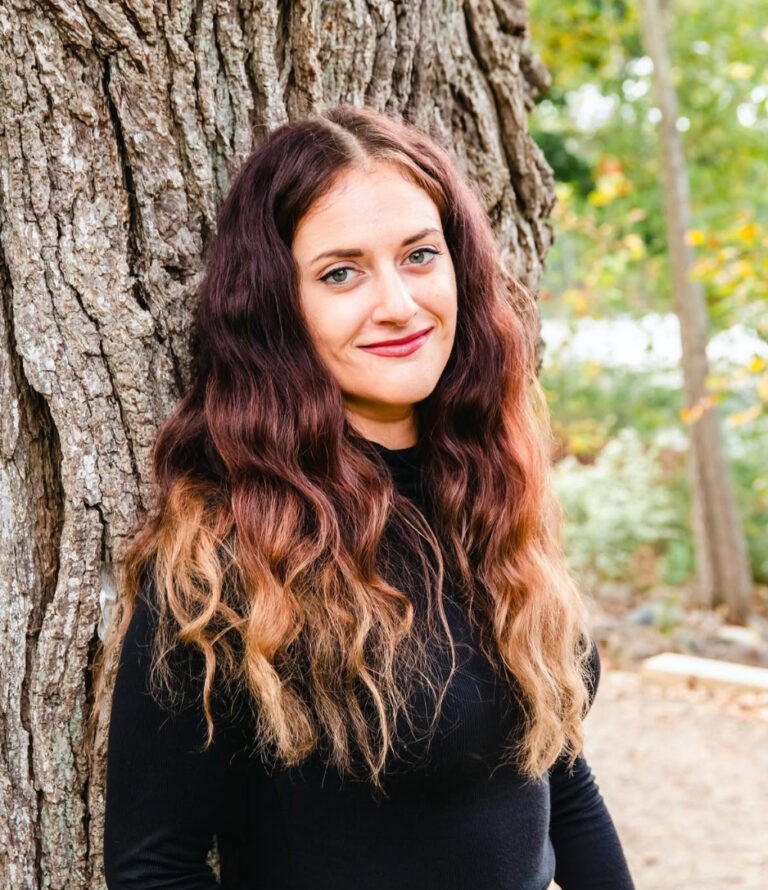
Lauren DuShane is the mother of a bereaved child and a doctoral student of Clinical Psychology at the Michigan School of Psychology. She is a pioneer in her field, as she is currently researching the lived experience of people who, during childhood, lost a parent to overdose.
DuShane explains why she has chosen to conduct her doctoral research in an area with no current studies or data. She also discusses her life before and during recovery, and her experiences with loss and grief.
A Growing Interest
“My interest in this area of study came about progressively,” DuShane begins. “The idea came to fruition at the intersection of my personal and professional lives. I am in recovery, so I am somewhat informed by my personal experiences. As I have gotten older, I have lost a lot of people close to me – friends and family. I lost my son’s father to an overdose three years ago.”
“When I entered my doctoral program, I was required to do a dissertation. At that moment, it was very clear to me what I wanted to do. I knew the exact area I wanted my dissertation to focus on. The astonishing part is that when I was doing my preliminary research, I discovered that there was no information, no studies, or data, on children who had lost a parent to overdose. All the research is on parents who have lost children, spousal loss, loss of friends, etc.”
A Shifting Landscape
“With the opioid epidemic changing and accelerating the way it has over the past 15 years, we are seeing it play out differently in society,” DuShane explains. “It is not just offspring who are dying; parents are also losing their lives. During my research, I discovered a study published by the American Medical Association. It was a longitudinal study that looked at the number of kids who have lost a parent to overdose over the past 10 years. The gross estimation is 350,000.”
“When my son’s father died, I was astonished at the lack of resources for bereaved people, especially as a mental health professional – it was quite disheartening. It has been devastating; it still impacts me to this day, and my son as well. This loss has informed my research and the work I intend to do. When I discovered there was no research into this area, I felt a sense of urgency to put something out there. I wanted to investigate this topic more because after my son’s father died, I lost other people close to me who have children.”
Reflections on Recovery
“I struggled with substance use for as long as I can remember,” DuShane says, “I’ve been sober for over seven years, and the journey to get there was really tough. It took a lot of falling on my face and deep internal questioning. It got to the point where it was no longer giving me the benefits it once did. Not just in the act of getting high, it was not numbing the pain the way it once did. The pain outweighed the benefits, so I got sober. Luckily, I have retained my sobriety but only after many failed attempts.”
“Through my own experience with addiction and recovery, I have seen how the tides have changed. There are so many kids in a position where they are feeling alone and being alone. People don’t understand that every person who is impacted by this type of loss is forced to live in a silo. I would like to contribute to helping people in these positions get connected to support and to bring light to these experiences that often live in the dark.”
Parallel Dynamics
DuShane offers insight into the challenges faced by kids who have lost a parent to overdose based on adjacent areas of study. “The most closely aligned topic with this is kids who have lost a parent to suicide because of the stigma that comes along with it,” she says. “The research shows that kids have a higher risk of suicide, substance use issues, and depression – the full range of mental health disorders outside of eating disorders. Not only do their circumstances impact their mental health, but their social health as well.”
“If your parent dies of a heart attack, which is something we can talk about in society without triggering intense emotional reactions from others. But kids quickly learn how uncomfortable it can be to share information in a space that isn’t open, and they decide they will not make that mistake again. So, their loss becomes a very siloed experience. I am interested to see how this situation arises and plays out for kids whose parents have overdosed.”
“An important distinction to make,” DuShane continues, “Is that a lot of the research on suicide shows that it was completely unexpected – no one saw it coming. But with overdose, that is not always the case. Research into adults who have lost someone to overdose shows that they usually see it coming. There is an anticipatory grief period where they have already begun grieving their loved one’s death before the fact. They have acknowledged the lethality of what is going on, which comes with its own grieving process.”
“I am curious to see if kids experience something similar, to see if they know, on some level, what is going on. Do they feel it coming? Do they detect changes in a parent’s behavior prior to their death? What was the experience like for them? How did people respond? What was helpful? What was not helpful? How were they treated as a young member of society as a result?”
“The hope of this research is to gain an understanding into how we as a society, mental health workers, and individuals – human to human – can help.”
Grief and Purpose
Having experienced multiple losses, DuShane offers insight into the effect of grief and how she has found various ways of coping. “The death of my son’s father was the closest loss I’ve had in a long time,” she says. “But there are different angles I look at loss from; I look at it from before I was using, from when I was in active use, and from being in recovery. Throughout addiction, when you lose someone, you always think it isn’t going to happen to you. Even though, intellectually, you know that is not true, there is a false sense of security to which you can succumb.”
“Regardless, after losing so many people, it becomes harder to know what to do with that grief. At some point, it is no longer about the one individual you have lost – it becomes a pattern. The facade of, ‘It can’t happen to me,’ starts to crack a bit. I got sober when my son’s father was still struggling with addiction. I held onto the idea that it couldn’t happen to me by thinking that it couldn’t happen to him. When it did happen to him, it was devastating. I was the last person to talk to him. We were no longer together, but we were still best friends - we talked all the time.”
“My immediate reaction was numbness when I was alone and trying to put on the bravest face I could for my son. I still acknowledged the pain; I didn’t hide tears from my son because this was sad, and it is OK to be sad when you are experiencing loss. I also found it important, as the years have passed, to retain the connection with my son’s father in all ways that my son and I can. We do our little rituals together. On the anniversary of his death, we take a vacation. We try to celebrate life and do a memorial for him on the beach or wherever we are so that we are taking him with us on our vacation. We try to laugh about the good time, but it is also important to be honest about our struggles as well.”
“That’s how I approach the grief as a parent. As an individual, I have found that I had to go through my feelings and create some space for myself to work through the feelings before I could delve into them in the ways I have more recently. Altruism and giving back have been helpful for me in my grief. I do volunteer work for FAN (Face Addiction Now). We do their annual Run Drugs Out of Town Walk.”
Long-Term Strategies
“Choosing to do my dissertation on this topic has kept me grounded in my lived experiences with grief. That is important considering the nature of the research and the work I am trying to do.”
“When my son’s dad died, I went to individual therapy at first,” DuShane says. “I took a break, then I went again. The grief and pain don’t go away. In fact, they can find new meanings in your life and new ways to pop up. The second year of grieving can be harder. The first year, you are ‘in the mix,’ and it can come with more support. The second year, the anniversary of their death is different.
“Support wanes as the years go on, and with drug-related death, there is an initial period of shock – even if you expected the tragedy. Studies show that the shock can take up to two years or more to come out of. And by that time, the immediate support is long gone. People are left in isolation to accept the reality of the loss.”
“In our society, if you’re lucky, there is an immediate response from the people around you when someone dies – especially in the first month. As time goes on, that support becomes less frequent because you are expected to have moved on by this point. But with a drug-related death, that’s not the normative grieving process.”
“To be fair, there isn’t a ‘normative’ grieving process,” DuShane concludes. “Everyone grieves differently, and that’s OK.”