Academic Celebrates Brother, Supports Latino Community
Part One
By Luke Schmaltz, VOICES Newsletter Editor
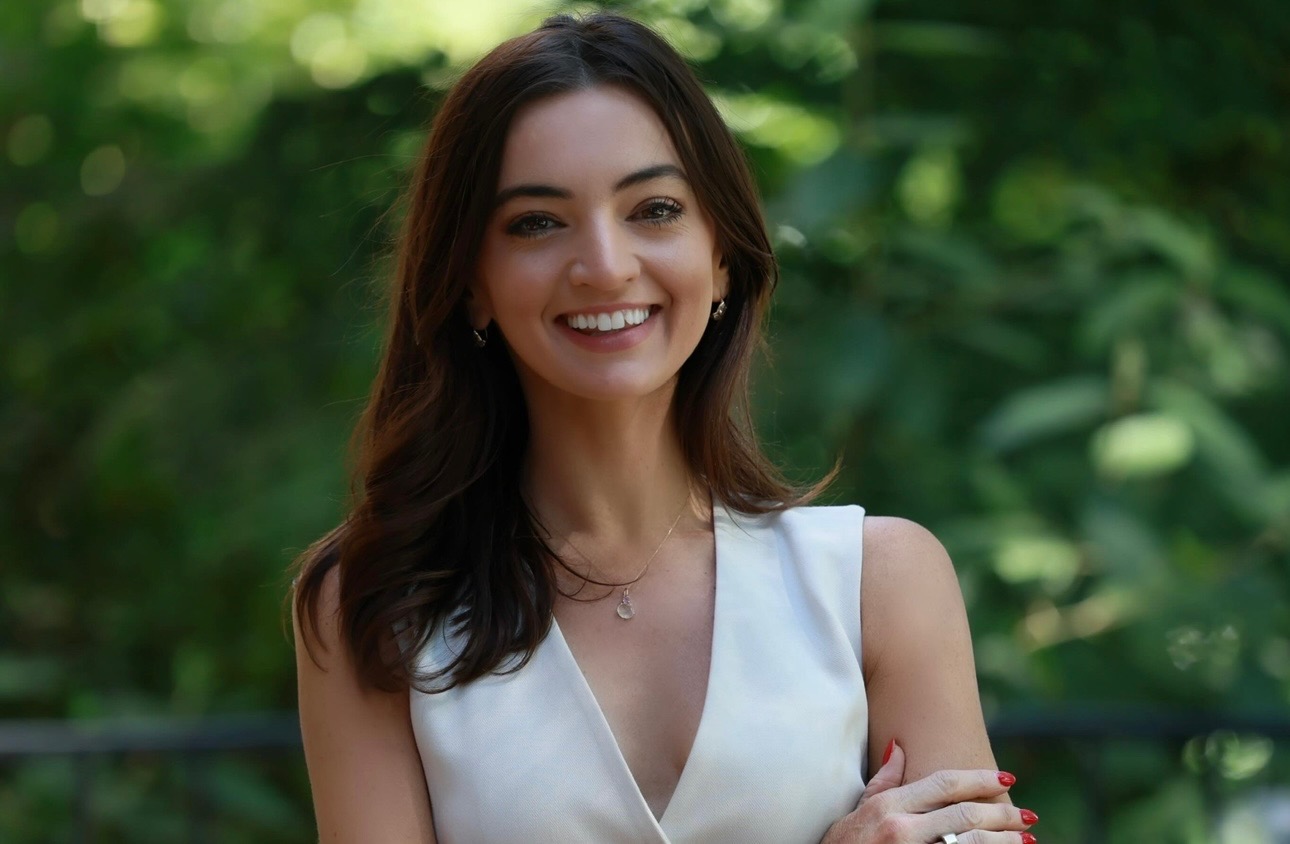
Gina Malagold serves as Director of Multicultural Affairs for Song for Charlie. The organization’s mission is to educate youth and families about the new drug landscape—from fake prescription pills made with fentanyl and other potent chemicals to high-potency THC.
This national, nonprofit, family-led charity aims to encourage young people towards healthy coping behaviors over self-medication through research tools, in-school programs, family conversations, and peer-to-peer learning programs
Malagold holds an astounding academic pedigree, with multiple master's degrees and a PhD from top-tier universities. She leverages her expertise in Drug Policy, Counter Narcotics, and US Latino History in her mission to raise awareness about the dangers within the contaminated drug supply. She is dedicated to preventing substance-use-related deaths while helping those who have lost a loved one find community in the aftermath of a tragedy.
Untimely Tragedy
In 2020, Malagold lost her 26-year-old brother, Dylan, to an accidental fentanyl overdose. “On July 19,” Malagold begins, “My brother got a hold of a pill that he thought was Xanax, but it contained fentanyl. He was a new dad with a four-month-old daughter. He was a very shy, sensitive person who struggled with school. But he excelled in the areas of people, family, and connections. He loved helping kids, so he worked as a crossing guard and as a lifeguard. He was the cool uncle who always came up with fun games for everyone.”
“He was very handsome, six-foot-one, with curly hair, big muscles, and cool tattoos that celebrated our Latino culture. My family is Uruguayan American, so we grew up with a bicultural identity. A couple of weeks after the funeral, a nice woman from our high school reached out and shared a memory from his French class. She explained that he did really well, which warmed my heart. I like to remember him that way.”
“Dylan had a benzodiazepine addiction,” Malagold continues, “So Xanax was his drug of choice. He started with an unused prescription from someone in the family. That’s why we pay attention to Drug Takeback Day. He quickly developed an addiction, which led him to get drugs off the streets. The pandemic created the perfect storm: he lost his job, became a new dad, felt completely lost, was isolated from old friends, and made new ones. We are fairly sure that the Xanax he was getting before he died was laced with fentanyl because he had two non-fatal overdose events.”
“At the time, I had never heard of fentanyl, but I embarked on a mission to save my brother. I started calling the crisis helpline, the police, and searching online. It was during the pandemic, so I was working from home as a professor – teaching online at Georgetown University – and trying to help my brother.”
Searching for Solutions
“The crisis helpline asked if he was taking opioids, but I explained that he was taking Xanax. They told me, 'Tell him not to mix it with alcohol and he should be OK.’ That was all the advice I got. That was one of many missed opportunities where if just one person said, ‘Don’t let him use alone,’ or ‘Carry naloxone,’ or ‘Teach him about fentanyl test strips,’ my brother could still be alive.”
“The best advice I got was from my OBGYN. She said, ‘Never give up on your brother.’ That compassion led me to start taking his calls again. My entire approach shifted from seeing him as an ungrateful drug user to understanding that he clearly needed help. I was able to see that, just like someone with any other illness, he needed support, he needed love, he needed his family to wrap around him, not push him away. So, that doctor’s comment during my yearly checkup made a big difference.”
“That is why I am so passionate about this topic. If I couldn’t help Dylan, even with access to all of these resources in D.C., imagine how hard it would be for a first-generation person like my father, who was totally at a loss for what to do. Then, you add in all of the stigma, shame, overwhelm, and the chaotic nature of drug use. It wasn’t easy – he was falling asleep behind the wheel, and we were worried about him getting injured or unintentionally injuring others.
A Perfect Storm
“My last real call with Dylan,” Malagold continues, “The one I’ll never forget, was on June 29, my birthday. My husband and I were hiking in Yellowstone. Dylan’s dream was to be a park ranger, and he had never been to one of the big national parks. He called and said, ‘You’re so lucky to have the life you have.’ His words really stuck with me and I said, ‘You can too, Dylan, you just have to make good choices’…or something like that.”
“After that, things got worse, and he finally got into a detox facility, but in order to get him admitted, my parents had to say that he was suicidal. He detoxed, came out, my parents thought he was ‘clean,’ and we had a little mini celebration. But he was exposed to COVID in the detox facility, and they told him to isolate, so he went up to my family’s cabin. He got a hold of more Xanax.”
“My dad found him a few weeks later, on July 18, with Xanax pills scattered around his body. My mom called me screeching – I’ll never forget that sound. I called one of my best friends and told her that my brother just died. I felt like I had to say it out loud.”
Compound Grief
“I process my grief by writing,” Malagold explains. “I am a researcher and a historian by training, so I started writing. I wrote his eulogy, and I wrote long notes to my closest people about the sequence of events. I started looking at old photos, trying to piece together the circumstances between shower crying.”
“My father tried to take his own life after finding Dylan. Fortunately, when he was in the inpatient psych unit in the hospital, a really nice doctor from our culture came to him and was able to reach him in our language. He helped my dad break through his grief and come around after being in the worst state imaginable. I feel like that doctor saved my dad in many ways.”
“Since then,” Malagold continues, “I have integrated both what happened to my dad, what happened to Dylan, my doctor’s advice to not give up, and my dad’s doctor’s cultural competency into everything that we do at La Nueva Drug Talk and Song for Charlie. It is so important to meet people where they are and understand what is driving their circumstances – be it substance use, trauma, or loneliness – rather than seeing them as needing a quick fix solution or someone who needs to figure things out on their own. I had to live through all that to truly understand it.”
Searching for Support
“The fall after Dylan died, I started looking for online grief support. That’s when I found SADOD and the Herren Project. There wasn’t much out there, and honestly, there still isn’t. I was looking for support that was unique to my loss – that of a sibling having died from an overdose. I found four groups that I would go in and out of, and those meetings were my anchor during that first month. Grief is so powerful. For the first four weeks, I could barely talk without crying. It felt like our whole house had burned down, and there was nothing left. My parents were broken, and his daughter didn’t have a dad. It was a really hard, painful situation.”
“The difference is, if our house actually burned down, there would have been support. People would have brought casseroles and cards and such, but instead there was a weird, eerie silence, with the exception of a few friends, whom I will love for the rest of my life.”
“In one of the grief support groups, I connected with another bereaved sister, Bianca, and now we work together. We collaborated on developing the La Nueva Drug Talk program. She presented at the White House on International Overdose Awareness Day in honor of her sister, Isabelle. We became grief sisters and supported each other because we had similar stories.”
New Conversations
“What I am most excited to share with SADOD’s audience is our Spanish-language program, La Nueva Drug Talk,” Malagold says. “We have underutilized resources for the Spanish-speaking community that are currently available, and I want to make sure we let people know about them. They are not just for the Spanish-speaking community, but for any first-generation or immigrant family.”
“We recently released a Spanish-language film called La Estrella. It is a 20-minute narrative film about the fentanyl crisis. La Nueva Drug Talk is an arm of Song for Charlie and the program that La Estrella lives in. We created the program with the help of experts such as physicians, scientists, and addiction psychiatrists to make sure it was evidence-based, culturally authentic, and created by Latinos for Latinos. From that program, we created La Estrella. We wanted to do something that resonated with the community, so we made it a short film; cortometraje. That’s how most Latino cultures enjoy cinema.”
“I truly believe that with this film and these resources,” Malagold concludes, “We can make an impact on the curve.”
In Part Two of this story, Gina Malagold takes readers further into the Song for Charlie organization, the La Nueva Drug Talk program, and La Estrella. She shares more about her grief and academic journeys, as well as the unique challenges faced by the Latino community. Please stay tuned to the July 2026 issue of VOICES for the rest of the story…