Where There is Life There is Hope
“Grief is like radiation, it can have a half-life, but it will never go away.” – Albie Park
By Luke Schmaltz, VOICES Newsletter Editor
Albie Park and Jess Tilley are co-founders of Harm Reduction Works (HRW). This international network acknowledges substance use as a complicated, deeply personal issue. Their approach sees abstinence as a viable solution and recognizes that it may not always be the answer.
Park is quick to point out the flexible nature of HRW. “It is loosely an organization,” he explains. “We are based in Northampton, MA. Our umbrella organization is called HRH413, which stands for Harm Reduction Hedgehogs. 413 is the area code and Jess is known in the harm reduction community for raising hedgehogs.”
HRW takes a dynamic, nuanced approach to a complex set of circumstances. This strategy presents an array of options to a wide variety of people, as the devastating effects of opioids and other drugs continue to impact all segments of society.
Community Origins
Park spent his formative years in San Francisco in the late 1980s – during the HIV/AIDS epidemic. “I lived through years of people dying all around me,” he explains. “I never thought I’d see another apocalypse like that, and now we have the opioid crisis, which is actually worse in some ways. There are folks all over the country whom I worked with in one capacity or another that are dead now. All of them were remarkable for the harm reduction work they did, for the amount of love they were able to bring to their communities.”
“When I first moved to this area, I had no idea how to meet people. So, I decided to just show up at community-based, task force types of meetings.” Park says. He became involved with Hampshire Hope, a multi-sector coalition focused on reducing overdose deaths through harm reduction and recovery support. “They sent me to a harm reduction conference in Marlborough, where I met Jess Tilley through Jill Shanahan of SADOD.”
Reflecting on Grief
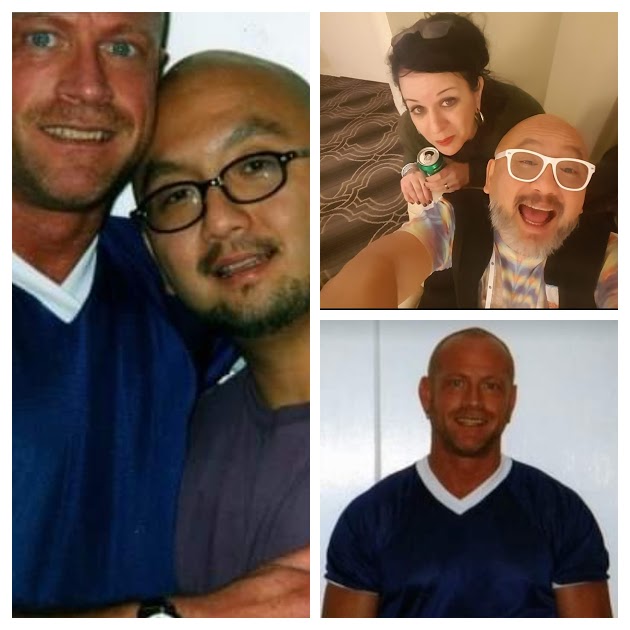
“For me, harm reduction is a collective reverberation of the experience of grief. The most pivotal experience of which was when my husband, Randy, dropped dead right in front of me. I lost my mind, I went through the worst depression of my life. Everything blew apart. That was 25 years ago. One of the things I came to understand, coming out of that, was that grief never ends. Grief is like radiation, it can have a half-life, but it will never go away.”
“When I finally saw my psychiatrist, one of the things I said when I thought I was feeling better, was, ‘I clawed my way to the surface, but the surface is barren.’ When Randy died, one of the first things that occurred to me is, ‘I have no idea what I believe.’ For the past 25 years, I have thought about him every day. I have learned that it is possible to have a relationship with someone who is dead. It is different, they don’t answer – certainly not in the same way – but it is not difficult to conjure somebody by focusing on what they gave to you.”
Genesis of a Movement
“By the time I met Jess, I had been in harm reduction for over 20 years,” Park continues. “I was known for, and vetted by my harm reduction work in San Francisco.” Meanwhile, Tilley had amassed an impressive resume of accolades for her work in the same field. As the two hit it off, they began exchanging ideas about their shared profession. From these conversations, HRW was born.
Tilley cites harm reduction pioneers such as Dan Bigg and Edith Springer as mentors, the former being the person who first brought naloxone (Narcan) to the U.S. Tilley is also considered a giant in the field. Before HRW, Tilley was facilitating a group that she described as a harm reduction book club, using Over the Influence by Patt Denning and Jennie Little as their platform for discussing the topic.
Inspired by this, and with Tilley’s editorial help, Park wrote the initial HRW Script. “In general, harm reduction is an inward-facing circle,” Park explains. “Over the years it has gotten bigger, but it is still facing inward. My questions have been, ‘How do we invite people in? How do we get them to turn around?’ The reason why I thought that was important, is because we wanted to win the war on drugs. The only way to do this is to introduce more people to these ideas.”
Gaining Momentum
“Eventually, we came up with the meeting guidelines that are on the HRW website. In 2019, we were interviewed on a podcast called Narcotica, and we talked about why harm reduction works as a tool. Because of that, we were invited to the Drug Policy Alliance Conference in St. Louis to do harm reduction meetings. We presented every night of the conference, it went well, and we considered that to be our national launch. This was in October, and up until then, due to the high-touch nature of harm reduction, I was resistant to putting our platform online, but then, COVID-19 hit. Meetings started moving onto Zoom, and HRW really started to gather momentum.”
“The way this model is founded is, every group is independent, and can choose to be as interdependent with other groups as they want to be. Unlike the 12-step approach, there are no sponsors in HRW. Another thing we focus on is simplicity. The one thing I urge people to ask themselves when they are starting a meeting is, ‘Could somebody else do this?’ The reason why is because harm reduction is founded on the importance of a low-entry threshold. HRW is not an official organization. It is an incredibly flexible tool and a meeting model.”
Low-Entry Threshold
“The task of writing the HRW script was to explain what harm reduction is and how to do it in very basic terms,” Park says. “It is intentionally repetitive, because people coming to this may have ADHD like me, they may be new to this sort of language, or they may be high. Meeting facilitators can add things, but they are asked to not leave anything out.”
Park explains that the HRW model is helpful for people in recovery, recovery center personnel, people struggling with substance use, loved ones of those who are struggling, people working in outreach, and many more. “The HRW approach is group exercise-driven, which can be anything from listening to podcasts, watching things on YouTube, having a show and tell session, or reading articles together. All the meetings are really different from one to the next. The focus groups are for people who are currently using alcohol and other drugs or have a history of that. Open groups are for everyone.”
“The low-entry threshold means that somebody who is new to harm reduction and wants to learn more could actually start their own meeting even though they don’t know much about it. I make sure I tell everyone at the meeting I host every Tuesday night at 6:00 p.m. Eastern that Jess and I are not the heads of this, we are the founders. We are not interested in being important. We are only interested in introducing harm reduction to others. The way I see it, every attendee is an expert in their community, and they can administer harm reduction and teach others to do so.”
Weekly HRW online resources are available at harmreduction.works including a meeting script, meeting calendar, meeting guidelines, and more. Anyone interested in harm reduction can go here to find a meeting or learn to start their own.