IRETA Director Supports Grieving Families
Part One
By Luke Schmaltz, VOICES Newsletter Editor
The Institute for Research, Training, and Education on Addiction (IRETA) specializes in helping people respond effectively to substance use-related issues. The organization provides support for kids and families who have experienced parental loss, as well as a comprehensive array of public health resources.
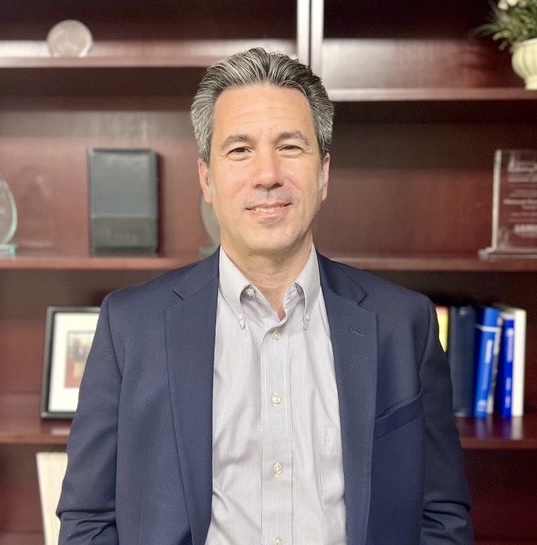
This independent nonprofit, headquartered in Pittsburgh, PA, is led by Eric Hulsey, DrPH. Hulsey has been involved in public health, epidemiology, and community outreach since the early 2000s. He began volunteering in harm reduction and overdose prevention while pursuing higher education. He earned his doctorate from the University of Pittsburgh in 2008.
Mission Possible
“IRETA’s focus is on supporting kids, families, and caregivers who have experienced a parental loss,” Hulsey begins. “I have been working in this area for a long time, and we are working to do something about it. One of the things we decided to do was to organize a steering group by assembling a bunch of resources from our local community that families can access for support.”
“We have the medical examiner’s office, the funeral home association, people with lived experience, people working in school-based mental health, and a local bereavement center – a wide range of people. We identified the types of support that families and kids need in the immediate aftermath of a parental loss. We also recognized that support is needed in the long term, years later, around holidays and anniversaries.”
“Initially, we had a group discussion to determine if everyone was going to be able to commit to this project. We needed to meet monthly, identify what we want to accomplish, agree on our goals, and figure out how to achieve them. The bottom line is we want to do something.”
Shifting Tides
Hulsey’s experience has given him keen insight into the nuances of harm reduction and how it can mean different things, depending on where and to whom it is applied. “There is a Venn diagram that demonstrates the overlap of harm reduction and recovery,” he explains. “One approach is trying to achieve one goal, while the other approach is aimed at a different goal. Harm reduction as a philosophy and harm reduction as a service are two different things, but people sometimes use them interchangeably. I don’t do that, but I have an ear for when I hear it.”
“The shifting attitudes towards harm reduction are starting to remind me of 20 years ago,” Hulsey says. “Back then, if you used that language, you were pegged as someone with a certain agenda. Regardless, it does work if that is what you are trying to do: reduce harm.”
“We were doing overdose prevention before anyone even cared about it. In our county, no one was paying attention to it until we hit some magic number of, let's say, 300 overdoses. No one was listening to us, even though we were shouting from the mountaintops that people needed to pay attention to this.”
Experience and Education
“Back in the mid-2000s, I was volunteering with a harm reduction organization in Pittsburgh,” Hulsey continues. “I was trained in overdose prevention and naloxone distribution and was facilitating these trainings in the local jails and the needle exchange site at our local health department. Shortly before that, I had lost my mom to cancer, so I had my own experience with grief and loss, and I was also starting grad school.”
“A couple of years later, while doing my dissertation, I was placed with a local bereavement center. I became much more familiar with what is available to the young people in the community who were grieving. This facility has an all-volunteer, peer-led staff and offers a non-prescriptive program. The kids are placed in groups according to age, and the child’s surviving caregiver participates as well. The six-month program helps kids process their circumstances through creativity and other activities.”
“While doing my dissertation, I participated in a focus group as I was studying how this program helps kids and families. Many people, including facilitators and kids, said that what helped them cope with grief was being with others who have had a similar experience. I remember a teenage girl explaining that her dad died by suicide. While I understood that was the end result – the unfortunate outcome, I couldn’t help but sense there were deeper layers of issues within that situation.”
“What I learned from that girl and from many other situations is that overdoses and suicides are stigmatized deaths with deeper layers. Within the normal bereavement models, and there are several, when you know someone is ill and they are going to die, you have time to process and say goodbye. But stigmatized, unexpected deaths present complex bereavement for kids and adults. This is a unique category that has its own process because of the attached dimension of stigma.”
Stigma and Risk
“Another thing I learned from bereavement centers,” Hulsey continues, “Is that it’s hard to develop and offer specialized programming for stigmatized deaths because of the relative rarity compared to other types of death.”
“I also led an analytics team through the county of Allegheny, where I was able to get my hands on all sorts of data points. We set out to create a road map to help people
understand who vulnerable people are and where they are dying. Now, everybody knows that getting out of jail is a very risky situation, whereas 12 years ago, when I was doing this work, it wasn’t common knowledge. We were able to show that people involved in mental health treatment and people leaving incarceration are very much at risk. Also, people at risk are not only those currently in substance use treatment, but also those leaving residential treatment or those involved in a methadone program.”
Spreading the Word
“As I left that job for another position, I published my findings in the Journal of the American Medical Association (JAMA) Pediatrics. As a former family therapist, I am always looking at information through the lens of helping kids and families. So, I asked the question about that data, ‘How many kids in Allegheny County experienced the loss of a parent from overdose?’ I looked at birth certificates and death certificates to see if the deceased had any kids, over an 18-year period of time. I determined that, at that time, there were around 1,000 kids between the ages of one and 18 who had lost a parent to overdose.”
“Then, we asked the question, ‘What happened to the kids after the parent overdosed?’ What we found was that, at that time, more kids were presenting to the mental health services, especially in the months afterward, and we also saw some involvement in family court. The county updated that analysis, did a good job on it, and released that information last year.
“What we hope this information does is facilitate more dialogue about kids who are experiencing these challenges in the middle of an overdose epidemic. Yes, we should focus on the people who are vulnerable and suffering right now, but it is important that we don’t lose sight of the fact that there is a whole new generation being affected right now as well.”
“Last fall, I put a post on LinkedIn about this work, which caught the eyes of a group in Michigan, including an epidemiologist and people from the Health Department. They asked if I would work with them, and I accepted. I sent all my materials from my study in Allegheny County, and they did their own version of this type of study. I’ve been banging the drum on this issue for a while now, and last year, the State of Michigan released a data brief on the number of affected kids in Michigan, the counties they live in, and where the attention should be focused. A couple of months later, Allegheny County published its report.”
“I am not an influencer, but it was nice to know that the work I did several years ago, and published on the JAMA site in 2020, is finally reaching people who can use it to open up a larger dialogue. There has been such a response, and I am realizing that maybe, after all, people care about this issue.”
Forward Direction
“When I got this new job as director of IRETA, I started scheduling webinars with our team and our colleagues from Michigan. So, we did one in January, and there were 300 attendees, including people working in this field and people from affected families. People were deeply engaged in the discussion, and we offered the current science as well as suggestions for response strategies.”
“From there, we suggested that the next step was for people to organize in their local communities – something we planned to do as well. A few months later, we organized an event in June of this year. We had people from our school-based mental health services, people from our county-based behavioral health services, a representative from the funeral home association, our medical examiner, a representative from a regional bereavement center, and a bereaved mother and grandmother who lost her son and is raising her grandson.”
“We are working to mobilize a steering group to bring attention to this issue and see if we can do something in our county that can be scaled up to affect a wider population.”
In Part Two, Eric Hulsey delves deeper into the history of IRETA, the mobilization of the Allegheny County Steering Group, the emergence of fentanyl analogs, the enduring role of harm reduction, and more. Stay tuned to the October issues of VOICES for the rest of the story…