Organization Founder Helps Grievers Live Through Loss
Part One
By Luke Schmaltz, VOICES Newsletter Editor
For parents who have lost a child to overdose, the long-term anguish of incomparable grief can present profound challenges.
Many who have experienced this type of loss acknowledge that without peer support, they may never have journeyed through the pain and could have stayed stuck in the initial avalanche of grief.
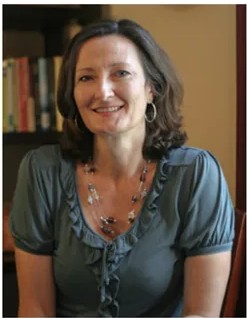
Jamie Eaton is the founder of Living Through Loss in Frederick, MD. The organization is, “...a community for parents who have lost a child to overdose.” The mission is twofold:
- To support parents through their grieving journey, both individually and communally.
- To support each individual in reinvesting in community and life in a meaningful way.
Filling the Void
“I started Living Through Loss back in 2019,” Eaton begins. “I am a therapist and at the time, I had acquired a new client who made an initial appointment with me. Between the time we scheduled the meeting and the time we met in person, her daughter died by overdose. She came in looking for support. I couldn’t find a grief support group that could help her, so I started one.”
“I ran this group, and it filled up immediately, so I ran it again and it kept filling up. When 2020 rolled around with COVID, things got really bad, and we went online like everyone else. At first, I thought we were going to lose so much in terms of having that personal time together, but what we gained was the ability to serve so many more people.”
“Now that we are in our seventh year, we have an online community, but we also do in-person support. Some of our online community is spread out, but they come once a year to our annual two-day retreat. Locally, we do several events throughout the year because once people complete the initial six-week grief support group, they are wondering what to do next.”
“Once a month, every first Thursday, we do an open-share group open to everyone. Additionally, I have developed a series of three different, six-week grief support groups. They are designed along the journey of grief.”
Group Dynamics
“The first group is an introduction to the basics of grieving, and it gets people into a supportive community. It focuses on learning to recognize the emotions that come with grief that you might not expect, such as anger, relief, and guilt. The latter two emotions are specific to overdose loss, more so than other types of loss. It is important to provide a space where a parent can say, ‘I am a little bit relieved,’ and everyone else present can agree. It is so healing to be able to tell someone, ‘We know you love your child, and if love could keep them alive, they would still be here. But we also know that you might be able to get a full night’s rest now because you’re not waiting for the front door to open at 3:00 AM.”
“The second group is more about figuring out how to exist in the world without your child, and the third group is about finding purpose and meaning-making in your life. People come in and do the introductory group, then, several months later, they do the second group, and after another nine months to a year, they do the third group. The program walks people through grief gradually because, as we know, it doesn’t end.”
“In all three six-week sessions,” Eaton continues, “We address how to heal your nervous system. Many of the people we work with have been traumatized by constant worry – they have been in fight or flight mode over a long period of time. In this process, we used what is known as the Polyvagal Theory, which involves learning to recognize when your nervous system is in fight, flight, or freeze mode, or when it is in collapse – something that is not talked about too often.”
Finding Balance
“We do a lot of work on recognizing when you are out of your window of tolerance. We teach exercises for when you are in a state of collapse and lack motivation. Some of them are physical, some are somatic, some are breath-oriented, and some are cognitive. These help bring people back to their resting state, rather than in collapse or in fight or flight – those states are considered outside of one’s window of tolerance.”
“This approach is about how you developmentally move through the grieving process, based on what you face during the first year, the second year, the third year, and beyond. We address what life might look like moving forward. We emphasize that, after losing a child, you can have an abundant life again, but it is never going to be full the way it was before. There will always be a hole.”
Eaton acknowledges that, for many, the second year after the loss of a child is harder than the first. Thus, the continuum of support that is woven into her programs. “We have found that, if people who are in their second year of grief are lumped in with the first-year people, it can be very overwhelming for the first-year people. To have them consider that their grief might get worse is not helpful in the moment.”
“By putting a general timeline in place, we have been able to help people in their first year to just face what is happening in their lives presently and be with others experiencing the same circumstances. Similarly, the second-year people can be together, and the people in their third year who are finding a new normal can also be together. Third-year people are great to have on any level, but first and second-year people, putting them together, can sometimes be too much.”
“All of our services are free, because we are supported by grants,” Eaton explains. I have created a handbook for each of the six-week groups, and we mail out all the materials ahead of time. I have two other therapists who work with me, and we all follow the same meeting format.”
Reinvesting in Community
As part of the third phase, we emphasize finding meaning and purpose. We encourage participants to invest in something bigger than themselves, and it doesn’t necessarily have to be overdose-related. For some, that might mean becoming an advocate, for others, it might mean aligning with an organization. One such group is called Shatterproof. They work to regulate treatment facilities and give them a rating so that before you send your child to that facility, you see how effective their services have been for other people.”
“Shatterproof was started by a man who lost his son to substance-related death. We have a parent who went through our program who is now a chapter leader for Shatterproof. She does their annual walk and gets other parents to participate to raise funds, and that is her reinvestment.”
“This could also mean investing in your grandchildren,” Eaton continues, “And interacting with them to heal the generational trauma piece. We are striving to provide resources for learning to talk to children whose parents have died from overdose, as well as support for kids, such as summer camps.”
“Every year,” Eaton continues, “I volunteer at Experience Camps, which are summer camps for grieving kids. I am the Senior Grief Specialist and part of a team of volunteer counselors. Every morning, we do a grief circle with the kids, and they spend the rest of the day doing fun camp stuff. These camps are huge, and I volunteer at the one in the Poconos in Pennsylvania, and there are camps in seven states.”
Grief and Stigma
“When it comes to stigma and harm reduction, there are countries in Europe that are doing a much better job than we are,” Eaton says. “Harm reduction scares people, and we, as a society, are in the middle of still trying to understand the benefits of the approach. Harm reduction is grey, and most people feel more comfortable with something that is black and white. The topic can be very triggering for some parents because they either think it could have saved their child or that it was what got their child in trouble in the first place.”
“To me, the harm reduction piece is very complicated within the peer recovery world. Right now, what defines recovery is fluid. Someone might say they are in recovery even though they still smoke marijuana. It all feels like the wild west because it is relatively new in the U.S. I don’t know how it is all going to shake out but I like the idea of harm reduction. We carry Narcan and we support anything that helps people where they are on their journey.”
“In a perfect world, we would have a really robust mental health support system,” Eaton attests. “For someone who needs methadone or some similar support, ideally, they would also have someone there helping them heal their trauma and overcome the things that are triggers in the first place, but we just don’t have that. Some of the parents in the Living Through Loss community are rigid in their understanding, which I totally respect.”
“We try to meet people where they are and honor their position because we are all where we are for a reason. Sometimes that changes for people and sometimes it does not. We create a safe space for anyone who comes to us for support through compassion, understanding, and acceptance of anything that doesn’t break community.
In Part Two, Jamie Eaton shares deeper insight into the program elements of Living Through Loss and discusses equine therapy for grieving people as well as the offering of her curriculum for anyone who wants to replicate her work. Stay tuned to the September issue of VOICES for the rest of the story…