A Message from Nick
By Kerry J. Bickford, VOICES Founding Editor
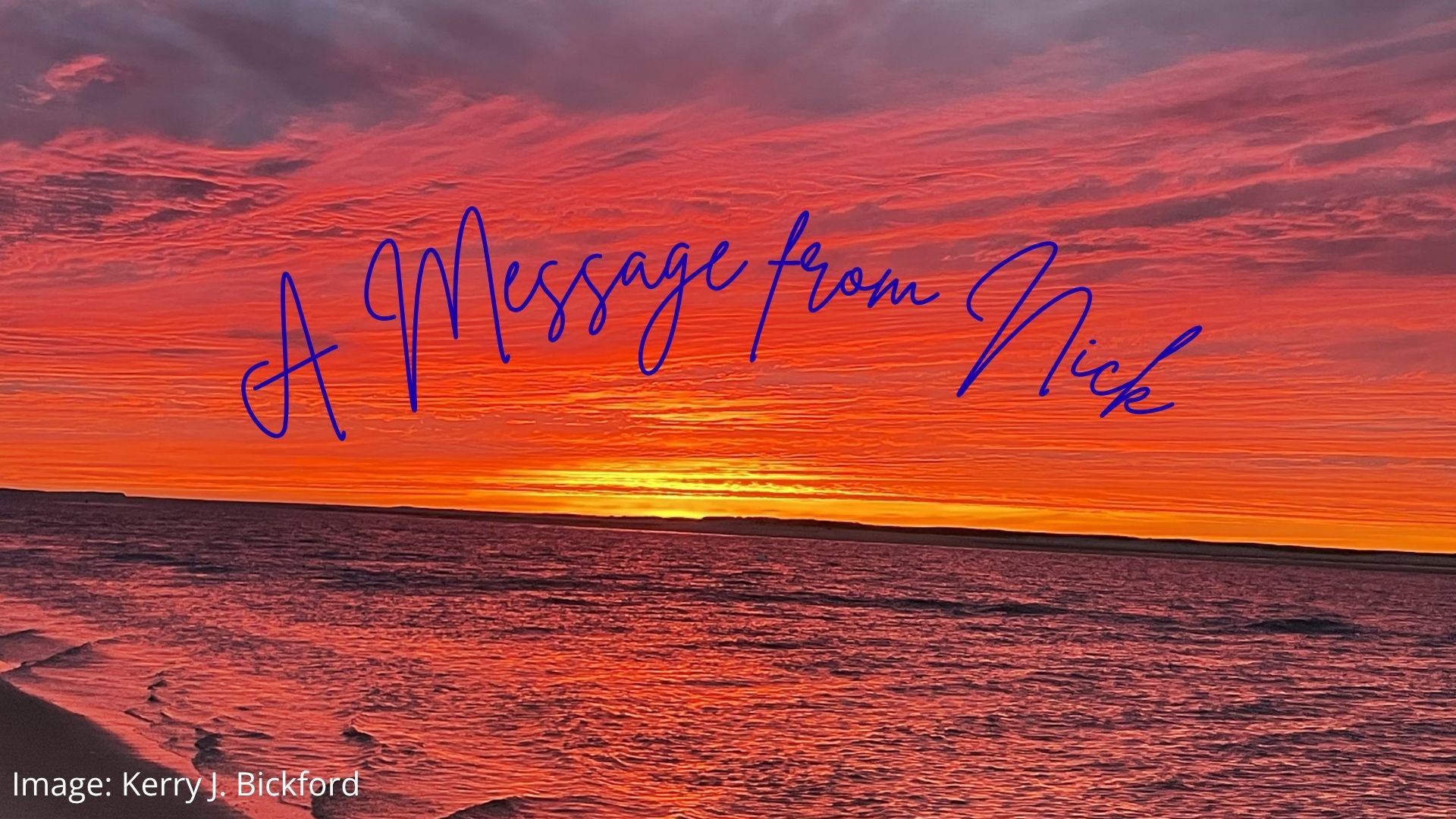
Days after the death of her son, Nick, to an overdose, Robyn Houston-Bean was wandering around her house in a cloud of sadness when she came across a notebook. She opened it and saw the words, "Please be happy, the sun will rise," accompanied by an illustration of beaming sunlight, written in Nick’s handwriting. The next thing that happened would affect hundreds, if not thousands, of grievers across the next decade.
Nick Bean died unexpectedly in May of 2015, after a sustained period of recovery. He was working as an EMT in his community, living with his parents, and, on the surface, seemed to be happy and thriving. In retrospect, Robyn asked herself over and over, "How could this have happened?" It is a question that many family members, colleagues, and friends have come to ask themselves as the overdose crisis has consumed the lives of so many and left a trail of grievers and survivors in its wake: How could this happen to my loved one?
But Nick's words also ignited a passion in Houston-Bean, helping her channel her grief and anger into the creation and expansion of essential grief support for those who have lost a loved one to substance use. Inspired by Nick's message, she has dedicated the last decade to developing grief support initiatives and establishing a non-profit network across Massachusetts; a network that now includes over 40 peer grief facilitators who lead support groups tailored to diverse needs, including parents, grandparents, siblings, friends, couples, the LGBTQ+ community, and those experiencing multiple losses, among others.
Houston-Bean's journey began by attending a local support group, where she quickly found a sense of belonging. By December 2015, she had founded her own support group at Braintree Town Hall, aptly named "The Sun Will Rise." That first meeting attracted eight attendees, underscoring the need for a stigma-free space for those mourning loved ones lost to substance-related deaths. Eventually, The Sun Will Rise Foundation was formally established as a 501(c)(3) nonprofit organization with the vision of creating "...a compassionate world where individuals and families bereaved by substance use-related deaths find healing, peer support, and community free from stigma and shame."
Houston-Bean: “In those early days, everything was driven by my deep need to do something meaningful in the face of so much pain. I began hosting an annual music festival called Beanstock, bringing together people affected by substance use through music and community, in a deliberate effort to reduce stigma and shame and to raise funds for overdose awareness. There was a memorial ceremony at the end of the night, where people were invited to drop glow sticks representing their loved one(s) into a huge glass jar. Funds raised in those early days focused on providing scholarships for sober living, supporting recovery, and helping create stability for those struggling.”
“As we grew, we focused on raising funds to meet the increasing needs we faced. Darlene Mesereau (a bereaved mother) became the facilitator of our first expansion group. She first came as a participant, sitting in the same kind of circle so many others have, just trying to get through the weight of her grief. Over time, she found a connection and a sense of steadiness in the group, and that’s where the shift started. When she stepped into the facilitator role, it wasn’t about having all the answers; it was about holding space the same way it had been held for her. That’s how this work has always grown: by people who have been supported, turning around and offering that same support to someone else. Many of our early groups started this way.”
By 2020, TSWR had begun to expand its in-person groups, but the COVID pandemic led to a temporary pause. During this time, many groups transitioned to virtual meetings, making it easier for people to attend since they no longer needed transportation and had multiple options for meeting days and times. While some groups eventually returned to in-person meetings, others continue to meet virtually, offering a variety of options for everyone and the ability to attend a support group in real time without waiting a month for the next one.
Around this time, Houston-Bean and the foundation started working with Support After a Death by Overdose (SADOD)to enhance peer-led support opportunities across Massachusetts. They also aimed to provide education and support to the many committed facilitators. Through this collaborative effort, several methods were developed and implemented to better meet the needs of grievers. This partnership continues to thrive and serves as a solid model for peer grief support at its best.
One of the unique characteristics of TSWR is its commitment to providing multiple opportunities for self-care, in addition to peer-led support groups. For example, they have hosted a "Silver Linings" workshop where participants can create keychains or bracelets engraved with the names of their loved ones. Such artistic opportunities allow individuals to use their hands to craft something meaningful while connecting with others who are also grieving.
Additionally, TSWR has organized boat excursions on beautiful sunny days along the Charles River and in Boston Harbor, as well as trips to Red Sox games at Fenway Park. An annual hike up a nearby mountain invites participants to "say (or yell) their loved one's name" at the mountaintop, creating a poignant moment of remembrance.
During the holiday season this past year, a new workshop encouraged grievers to "set a place at the table" for the empty seat we all dread in the absence of our loved ones. Each participant created beautiful plates, ensuring that no two were alike, as they worked to capture the essence of their loved one and keep it close during the holiday season.
Another annual occurrence is the observance of International Overdose Awareness Day in Braintree with a butterfly release, which draws a crowd of hundreds and features guest speakers, including politicians and families who have lost loved ones to an overdose. It is hard to describe. Every year, the impact of this event is evident on the faces of the attendees as they reflect on the lives lost. The purple flags, originally planted for every life lost in the state of MA that year, have recently moved to the fences at town hall. It's a powerful visual as folks drive by, and a sea of purple flags waves in the wind, and butterflies take flight.
These are just a few of the many ways that TSWR actively supports those who are grieving.
Houston-Bean also sends out a weekly newsletter that begins with a thoughtful reflection on grief. She often cites her own grief journey as she describes the impact of an event, including the recent joy of her grandson's birth and the juxtaposition of the agonizing grief of Nick's glaring absence amidst this family milestone. The newsletter outlines the support available that week, includes a calendar of events, lists upcoming self-care opportunities, and provides other useful information for those who are grieving.
While Houston-Bean manages much of this on her own, she is supported by a dedicated team of compassionate individuals who work diligently behind the scenes. Marci McDonough (Robyn's sister), Oliviah Wagner (Robyn's daughter), Leslie Lagos, David Swindell, and Kerry Bickford all carry a certain amount of weight for this team, and all have suffered a substance-related death of someone they dearly love, which motivated them in the same way that Houston-Bean was motivated. There are countless others on the TSWR team —too many to mention—because "it takes a village." This is truly the engine of the organization.
You are invited to visit The Sun Will Rise to learn more about Houston-Bean’s efforts, but here's the heart of the matter: this initiative stems from a mother's love for her son and her unwavering determination to keep his memory alive. During this month dedicated to mothers and next month honoring fathers, we will shed tears for those who are no longer with us. Still, we must also be grateful that they lived and remember, as Houston-Bean does, that it's our job to keep their memories and messages alive.
Nick's words, "Please be happy - the sun will rise," resonated deeply within his mother and became a guiding light in the darkness and despair of grief. His encouragement from beyond allowed her to move forward with him, rather than without.
We're grateful to her for taking us with her by sharing Nick's story and for allowing each of us to share ours. Here's to the next ten years. Here's to remembering the sun will rise.