
Writer Speaks About Complicated Grief
By Luke Schmaltz, VOICES Newsletter Editor
Jeannine Marie Pitas is no stranger to grief and loss. Recently, she has endured the deaths of numerous loved ones in a succession of tragic events.
The resulting loss-upon-loss experience has given Pitas unique insight into complicated grief. In a recent article she wrote for U.S. Catholic, Pitas discusses how society needs to be educated on the matter to hold space for those who are suffering from multiple losses.
Introduction to Loss
“I am 42 years old,” Pitas begins, “And losing people in my age group is a new experience for me. I have lost more elders than I can count, including grandparents, older relatives, teachers, and family friends, but death starts to feel different when it is people in your own age group.”
“I have had three people near the same age as I pass away in the last few years,” Pitas continues. “In the fall of 2024, I lost someone I loved who was emotionally and verbally abusive, and who struggled with substance-use issues. He was an alcoholic, and he refused to go to a 12-step program or seek any sort of treatment. His mother, who was also an alcoholic, died of cancer a year prior. After she was gone, I felt like he had little to live for. By then, we had little contact because he had not treated me well, and I felt it necessary to keep my distance. I had moved to Pittsburgh while he was back in Iowa.”
“When Mark died, I felt a lot of emotions at once. I will admit there was a certain amount of relief because he could no longer hurt me. But I also felt immense grief that his life was cut short too soon. I can’t say that I had any guilt because I don’t think there was anything I could have done to prevent it. We had plans to talk, and I was sorry that we didn’t at least get to have one final conversation.”
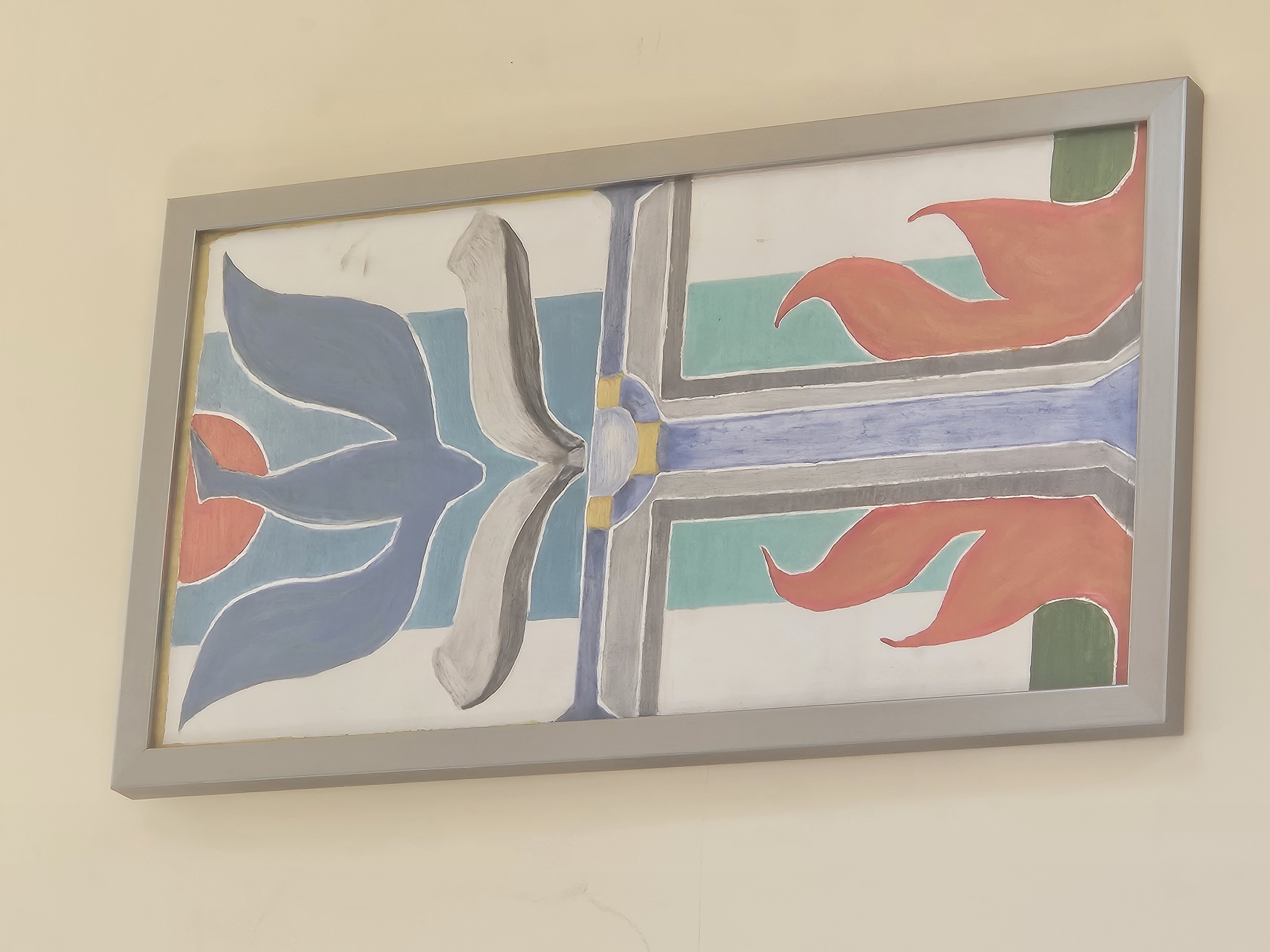
“He was a visual artist, and I recently hung up a beautiful painting he made. It was originally given to a church, and they gave it to me because they felt I would appreciate it more. Although I have only had it up for a few days, I look at it and think, ‘Mark, what a beautiful painting, you could have made 50 more.’”
Complicated Circumstances
“Mark was hit by a semi-truck, but the police ruled his death a suicide,” Pitas explains. “He was on the highway in a place where he would not have naturally been walking, and he was heavily intoxicated at the time of his death. What I’ll never know is if it was a premeditated suicide or if he was just very drunk and decided to do what he did in the moment.”
“There were moments when I had bad depression where I felt like I could have done something like that. Thankfully, those times are far in my past now, but if I go back in my mind, I can see where I could have gotten intoxicated and made a spontaneous decision to end my own life. Knowing that it may have been a conscious decision of his brings some degree of comfort, but it also adds to the complication.
I don’t know why I don’t feel guilty in his case. Maybe because when he was alive, he often said he was going to drink himself to death and that if he died, it would be my fault. I rejected that notion outright and I did not admit any sense of survivor’s guilt. It is complicated grief, because even now, I miss him.
“I remember Mark with fondness but also with sorrow – wishing that he could have been happier and that he could have lived. I still mourn his death and that is what I write about in the article I published about making space for complicated grief.”
Compounding Losses
“Last summer, a dear friend of mine named Kalissa was hit by a car and killed,” Pitas continues. “She is someone that no one could say anything wrong or bad about. It was a hit-and-run – she left behind three children. I was devastated by her death for many reasons, one of which was that she got hit at a place where I used to walk all the time. It could have been me. It drove home the idea that we are all vulnerable and anything can happen to any one of us at any time.”
“I think one of the reasons why stigma exists around certain types of death is because people think, ‘Oh, that would never happen to me,’ Especially when someone dies from an overdose or in a drinking and driving incident. But even with Kalissa’s death, I’ve heard some people say, ‘Well, why was she out walking?’”
“I had a third friend who recently died, and in this case, I do have survivor’s guilt,” Pitas explains. “I’ve lived in a lot of places. Mark and Kalissa were both in Iowa and I met Tina before that era when I lived in Toronto. For six years, I volunteered at the Centre for Addiction and Mental Health. I originally wanted to work on the addiction side, but I was put on the mental health side. I led a creative writing group for people who were patients in the hospital, outpatients, and residents of the community.”
“The group met every Wednesday, and we would write based on a prompt, and then go around taking turns reading what we had written. This group is where I met Tina – she participated almost every week and we became very close. At first glance, you would have no idea she had a mental illness of any kind, but she had schizophrenia.”
“Tina had gone to medical school, but the onset of her illness forced her to drop out. She had gotten into some trouble with the law and was an inpatient at the hospital for over a year. When I moved away from Toronto, I was no longer with the hospital, so I was able to be her friend. Between 2015, when I left, and the pandemic in 2020, I would visit Tina often. She would come to my poetry events and book releases, and she was my number one fan. She was a really good friend to me.”
“Along came the pandemic, the border was closed, and I was unable to visit Canada. We tried to stay in touch but drifted apart like people do. One of our last conversations, she explained that she had ulcerative colitis and a surgery she needed would make it impossible for her to have children. So instead, she did an alternative treatment, and I will never know exactly what happened. Her sister thinks the treatment didn’t work and the ulcerative colitis caused her mental health medications to not work, because they are absorbed through the gut. As a result, she had a major psychotic episode.
Mental Health Challenges
“Only one percent of people have psychosis conditions such as schizophrenia and schizoaffective disorder,” Pitas explains. “People with psychosis can be hard to help because often, part of their symptoms involve paranoia, which makes them rebuff help. At the end of Tina’s life, which is what she was doing. This is where I have some survivors’ guilt. I had a feeling something was wrong when I first visited Toronto after the pandemic; in the fall of 2022. I had a hunch that I should knock on her door and see what was up. As I was driving away from Toronto, I had this nagging feeling. It was around then that Tina’s sister was sending the cops over to her place to check on her.”
“In cases like this, people tend to want to wash their hands of any responsibility – it is almost like victim blaming. People said to me, ‘Well, if her sister couldn’t reach her, there was nothing that you could have done.’ I tend to disagree with that. I got the notice in February of 2023 that she had been found dead in her apartment in front of the television. Her death was ruled as natural causes, but we will never really know.”
“I feel like this was a failure on multiple counts. On behalf of the people who knew her, maybe we were trying, but not hard enough. Plus, she lived in a semi-supportive building with a door person. Why was it that nobody checked on her? It seems like Tina fell through the cracks, which brought on immense complicated grief for me.”
Doing Better
“The people who are around someone who is vulnerable should never be shamed, blamed, or stigmatized,” Pitas attests. “But at the same time, at the social level, it is important that we all do better for people who are struggling.”
“For 99% of people, it comes down to their own choices, but for someone with psychosis, the rules are different. When someone is coping with a mental health issue or a substance use issue, there is always the question of how aggressively those around them should intervene. With substance use, the person has to make a conscious choice to seek recovery. Mark was given choices and he made the choice he made. But with people like Tina, I truly think that the onus is on the people around them to do more.”
“To sum it up,” Pitas concludes, “We all need to do better for the people around us who are vulnerable and at the same time to not feel guilt over the people that we lose. Or, if we do feel guilt we need to forgive ourselves and channel it into something productive that helps others. It is also important that we recognize that we are all vulnerable and there is no demarcation between the sick and the healthy, those with addictions and those without, and we should all have as much compassion for ourselves and others as we can.”