
Podcasters Discuss Grief Over Death of Parents
Part One
By Luke Schmaltz, VOICES Newsletter Editor
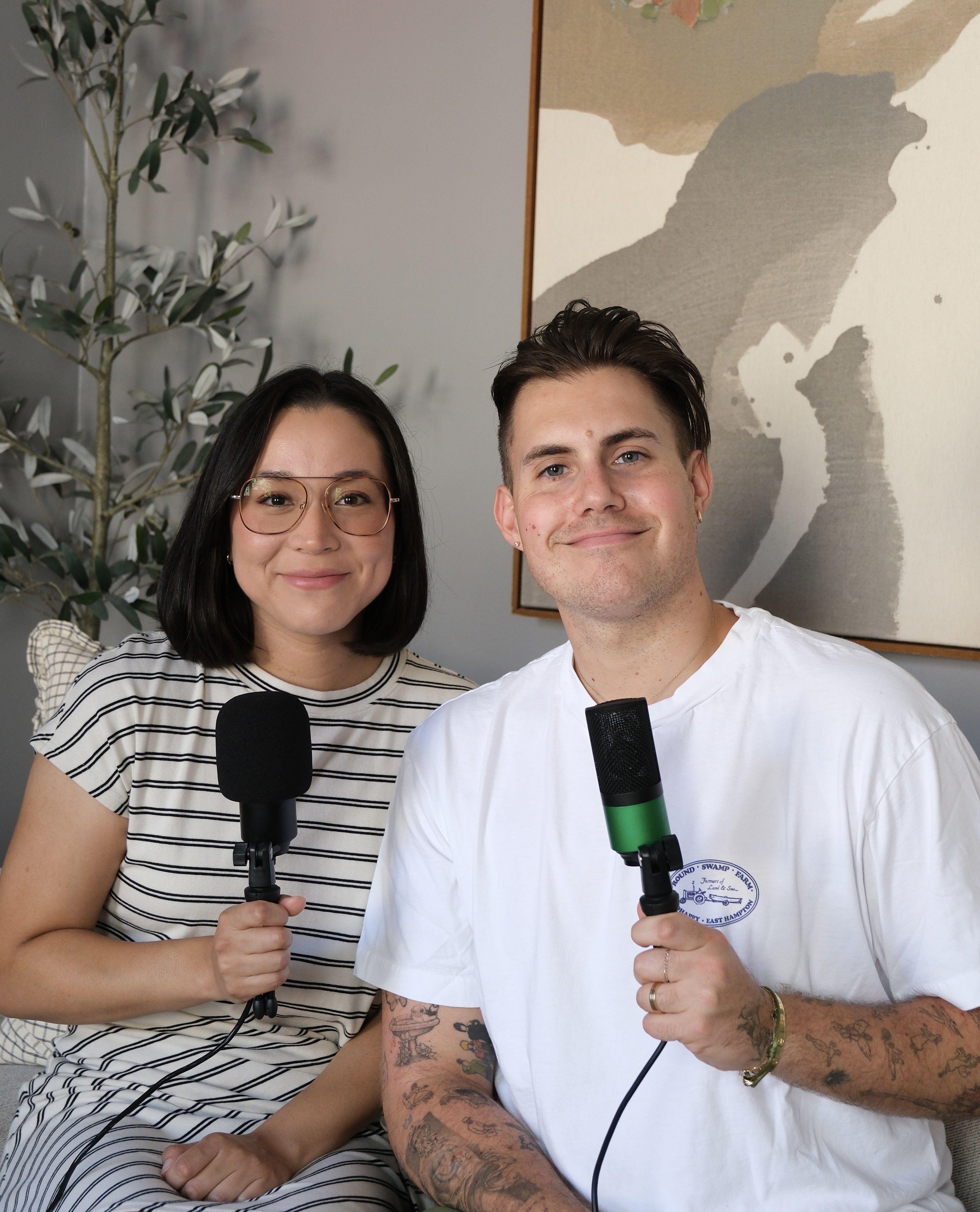
Emely Melendez and Max Hoffmann are the hosts of the Young Grief Podcast, an Instagram-based channel focused on the experiences, struggles, and perspectives of young people who have lost one or both parents.
Melendez and Hoffmann met at a grief support group for parental loss in Manhattan. Both attended their first meeting on the same day. Each offers insight into the importance of specified grief support, the anticipation of attending a meeting for the first time, secondary loss, and much more.
Specified Support
“The grief group we met at was tailored towards young adults,” Hoffmann begins. “My therapist found it for me. We heard from many of our peers in the group that there were not a lot of support spaces that were specifically designed for young people who were grieving.”
“I came across the group on Instagram,” Melendez explains. “I followed the therapist’s [facilitator’s] page – she was holding small grief therapy sessions. I was already several years into my loss, and I felt very alone for the same reasons as Max. There just weren’t many people having conversations about parental loss. We created the podcast because sometimes there is a generational gap that doesn't understand what it is like to navigate your 20s without your parent(s). I needed to have that connection and to be in a room with others who knew what I was going through.”
The First Meeting
“I have always been someone who wanted one-on-one support,” Hoffmann says. “I was scared of group settings that were vulnerable. But I got to a point with my therapist where she admitted that she couldn’t truly relate to me because she had never felt any of the things I was feeling. I was so apprehensive at first; I did not want to go. The first meeting was such an emotional experience. We all had to tell our stories of why we were there. For a lot of us, it was the first time we ever explained our circumstances from end to end. That was very emotional as was hearing other people’s stories. It was heavy, and it ended up being a great first experience overall, but it was tough getting to that first meeting.”
“I was actually very excited to go to my first meeting,” Melendez says, “Because this was the first time I would be going to a group where there was some level of commonality between everyone there. This would be an opportunity to speak about my loss and have an instant connection with others without feeling like people would know what to say because they didn’t have a relatable experience. Although I was excited, that level of vulnerability – in sharing your trauma with others – is scary.”
Podcast Origins
While Hoffmann and Melendez found the grief support group helpful, they concurred that there was still more to explore after each meeting. “I felt like the sessions ended and I still had a lot more to say,” Melendez explains. “I felt a natural pull to continue talking about it. Max and I understood that if we still felt like there was a lot left to say, then other people probably felt that was as well.”
“In going to the group week after week, a lot of common themes were showing themselves,” Hoffmann says. “It is important to recognize that, although loss is an isolating experience, most of us were dealing with the same kinds of feelings. We felt the conversation needed to continue so that other people could know that they are not alone. One of the hardest parts of grief is thinking you are alone.”
“Emely and I have both improved so much, mentally, from having weekly talks with each other and being seen and validated,” Hoffmann continues. “We knew that we didn’t want to go back to where we were holding everything in, and if we could help even one person by doing this, our mission would be accomplished.”
Secondary Loss
In some of their podcast episodes, Melendez and Hoffmann explore the phenomenon of losing friendships and connections with people in the midst of coping with grief over deceased parents. “We noticed that, when someone famous dies – like when Katherine O’Hara recently passed – you will see your friends and family commenting on social media about the impact the person’s death had on their lives,” Melendez observes. “But when it is our loss, those same people may not show up even though they know there is a conversation to be had about loss because they can feel it. It is difficult, especially as a young adult, because that realization can rip off the band-aid rather quickly. Meanwhile, you’re parenting yourself when you don’t even know what is right and what is wrong.”
“The last thing you want to deal with is losing more people when you have just lost one of the most important people in your life,” Hoffmann adds. “But, since you are in a space of realization, you have to get rid of people who are unable to support you because it is worse to have them around. It is a deliberate ejection of people who don’t have your best interests at heart, which sucks because maybe you want to keep them around. But if they can’t support you, you are forced to experience another loss.”
“Max and I moved recently [to different cities] and we are first time homeowners,” Melendez says. “There is a sense of loss in not having your loved ones present to experience these new chapters in your life. The loss is constant and it evolves. We both lost a lot of friends, initially, because they didn’t show up. So, there is a sense of loss of what potentially could have been; the memories you could have created with both the friends you lost and with your parents. There is a series of never-ending losses and they compound. Sometimes loss can serve a purpose and sometimes loss is just a really shitty thing that happens. You don’t always have to tie it up in a pretty bow.”
Distinct Perspectives
“We both have interesting perspectives on how grief changes over time,” Hoffmann says, “And it can depend on how you approach it. In the grief group where we met, some people had lost their parents just a few weeks prior and they somehow had the foresight to be proactive about it. For me, I had months of spiraling and making really poor decisions. I was going out a lot and numbing myself from the pain, which postponed dealing with it. That is why year two after a loss can be harder because, for a long time, you are just in disbelief about what has happened and you can’t come to terms with the fact that your life has completely changed and the world is now a different place.”
“In my experience,” Hoffmann continues, “Realizing how I need to act in order to start this never-ending journey of coping with my new reality has been the biggest difference from one year to the next. I was doing depressants and then one day, I was so distraught and I realized I needed help. But you can’t blame yourself for going through those destructive motions.”
“I would have to agree,” Melendez says. “When my mom died, I was just busying myself with avoidance and distraction. But you can only do that for so long before reality sets in. Initially, you get overwhelmed by all of these feelings. In my case, I shut down – went into a very deep depression that took a while to crawl out of. On the other side of that, I think I am now in a better place, but I grieve the time that I lost while grieving.
Young and Growing
“We love the idea of Emely being a co-host with the life experience of someone who put their grief to the side forcibly,” Hoffmann says. “We don’t want anyone to go through that, so we are trying to catch them as soon as we can to show them that they are not alone and to jump start their healing journey as fast as we can.”
“The initial support for the podcast was family and friends, “Melendez explains. “The more we shared our stories, the more the audience grew. It has been amazing to see how many different people from all over the country and even from abroad have reached out and told us how much the podcast has resonated with them and helped them. Not only do we have listeners who have experienced parental loss, we also have listeners who are dealing with the loss of a spouse, a sibling, and in some cases – a child.”
“We would like to expand and start getting new perspectives, but even if we are focusing on parental loss, we are also touching the common, grief-related themes of isolation, frustration, and fear that resonate with everybody. This goes to show that there is still a lot of work to be done in normalizing these conversations.”
Part Two will delve deeper into Max and Emely’s losses, their day-to-day strategies for coping with grief, and their journeys as the hosts of the Young Grief Podcast. Please stay tuned to the April issue of VOICES for the rest of the story…