
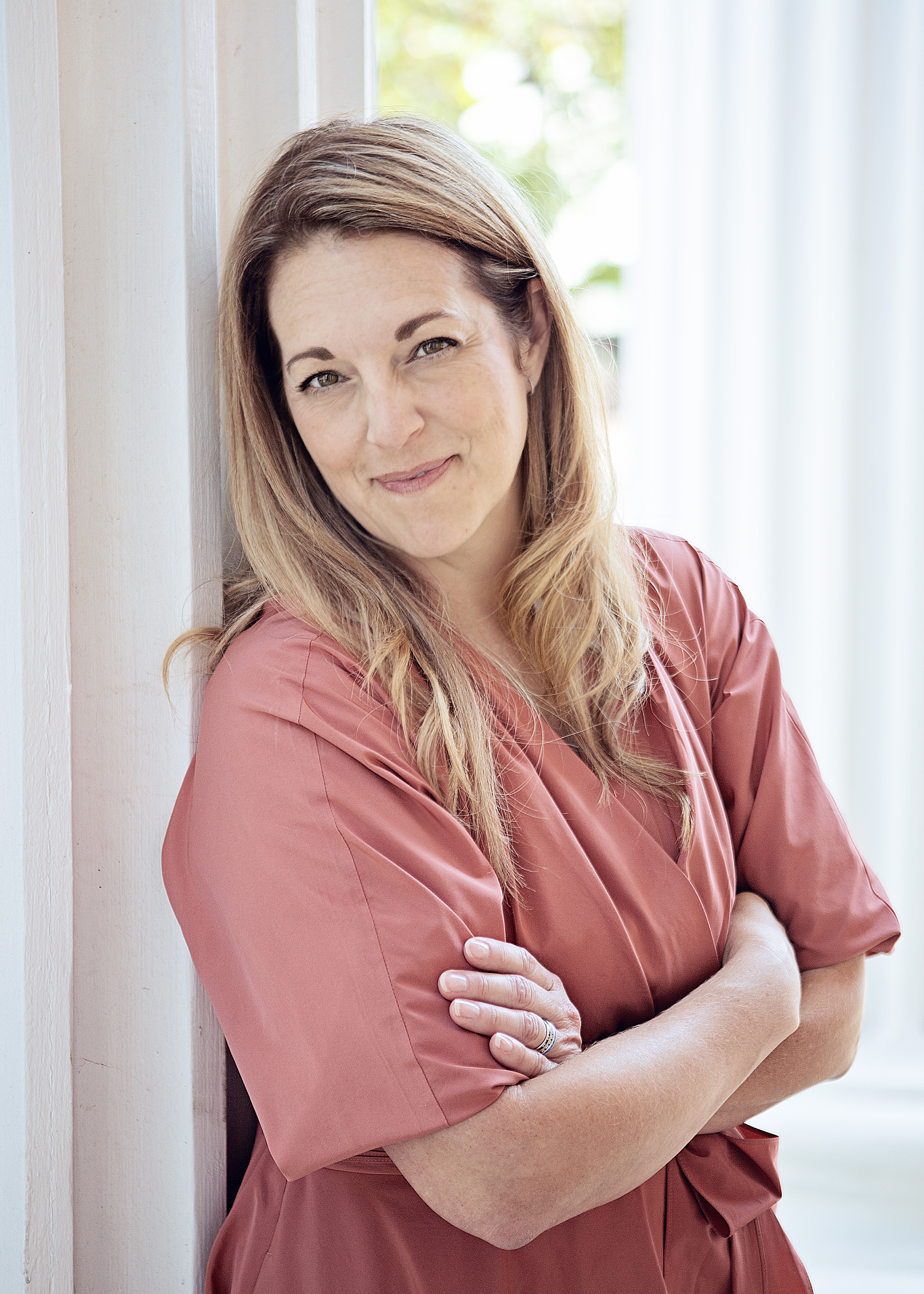
Bereaved Leader Affects Nationwide Change
Part One
By Luke Schmaltz, VOICES Newsletter Editor
Joyal Mulheron’s daughter died of a terminal illness.
While immersed in grief, she came to believe that there is wholesale dysfunction in the healthcare system and an astounding lack of resources for grieving people.
Professionally, Mulheron advises governors and the White House on health and healthcare policy. She vowed to use this experience as well as her background in science to bring these issues to the attention of Congress. In the wake of her daughter’s passing, she gathered herself and charged headfirst into her mission.
Taking Charge
“I wasn’t getting the care I needed during pregnancy,” she begins. “We suspected something was wrong, although I declined some rigorous tests because they would not have solved anything. So, I decided to go with it and see what happened.”
“I had a very sick kiddo that our team didn’t know how to attend to,” Mulheron says. “I read an entire medical textbook called Williams Obstetrics. I taught myself all about this field of medicine – I learned it backwards and forwards. I also studied the latest literature on fetal abnormalities.”
“I am a biochemist and a molecular biologist by training, so I was measuring and adjusting her formulas, medicines, and food in relation to her belly size. This is something hospice was not doing for us, so I did it myself.”
Financially, the circumstances were challenging for Mulheron’s family. Due to her primary concern over her daughter’s health, her employers asked her to resign. “They couldn’t legally fire me,” she explains, ‘But they pushed me to step down.”
“If I didn’t fight really hard for my child, nobody else would. By the time she died, I was managing a team of 24 different providers. It was very complicated care. I didn’t have her in a hospital because I felt I could care for her better than they could. No one cares about our loved ones like we do.”
“A couple of months went by, the care became more complicated, and our daughter passed away. Emotionally, it was incredibly challenging.”
“Initially, I thought it was my fault. There I was, advising governors and the White House while I didn’t know how to navigate systems of support in the aftermath of the death of my child.”
A Journey Begins
“Eight weeks after my daughter died, I was asked to advise the White House in the area of children’s health and wellbeing,” Mulheron explains “For the next two-and-a-half years, I woke up most mornings to tragic news stories such as Sandy Hook, Trayvon Martin, Chicago homicides, Jasper tornadoes, and the like.”
“I kept thinking that all these people are going to be told to go to a support group. There are great ones out there, but there are also lousy ones. Or they are going to be told to go to a grief therapist. There are no credential standards for this kind of therapy. It is like the wild west – so you can get great people – or you can get someone who took one course and claims to be qualified to treat you.”
“It was incredibly nerve-wracking, but with my family’s support, I started talking to people in Washington, D.C. – people working in food pantries, police stations, and in therapeutic capacities – places I was welcome. I began learning their stories about loss. I expanded my research, and after speaking with dozens of people across the country, I began piecing together some important facts.”
Hard Facts
“The CDC measures mortality events in the U.S. but what they don’t measure is who those people are connected to and the ramifications of the deaths. This is what is known as the Multiplier Effect. For every death, several individuals are impacted due to close relationships with the deceased. This means that for the three million-or-so deaths which occur every year in the United States, anywhere between 24 and 27 million people are affected.”
“Since I do public policy work, I tend to lean towards the cleanest, most conservative data. This is because I want to make sure that whatever I advocate for in public policy is anchored as strongly as possible in the best data available.”
“After speaking with many people from all walks of life, I started to form a population-wide picture of the various types of people facing challenges after the death of a loved one. I determined that many people are in great pain, and they are looking for ways to metabolize the loss. Yet, the systems society has built around grieving individuals are kicking people when they are down.”
“Rather than having systems that facilitate healthy coping, processing, and adaptation to a loss, we have systems in place that are telling people to get back to work. When people are experiencing one of the most profound events of their entire life, there is no support. So of course we are drinking, using drugs, and behaving irresponsibly because everything around us feels like it is falling apart. No one is honoring us as people, no values who we are or who we have lost. We are all just told to bareknuckle our way through grief, pull ourselves up by the bootstraps and get our asses back to work.”
Cause and Effect
“When my daughter died, I cried every day for at least 18 months,” Mulheron explains. “For a bereaved parent, the ‘hot zone’ of grief is at least three years.”
“What it all boils down to is the erosion of the social fabric of this country. What we are doing to our neighbors, our friends, our colleagues, is failing to respect or to value the significance of the life-changing event they are going through. Bereavement leave, or lack thereof, is just one facet. I don’t see bereavement leave as a standalone solution; the idea that, if people have more time, they will feel better.”
“The immediacy of loss can be like quicksand. Everything is shifting amid profound financial stress. The price of funerals, the predatory nature of the funeral industry, and the intentionality of hiding prices from the public are incredibly concerning.”
“In my peer-to-peer research, I discovered that bereavement is not just an emotional response to death, it is a gateway event for various health, social, and financial outcomes. Often, a life trajectory diverts in a downward direction.”
“In January 2020, prior to Covid-19, we had concurrent mortality data from homicide, suicide, overdose, maternity complications, and traffic fatalities. If we apply the Multiplier Effect to all these events, we have legions of people who are being impacted, but it is all invisible.”
Presentation of Evidence
“I took some very compelling population-wide data to Congress which demonstrates that bereavement is associated with a host of negative outcomes,” Mulheron says. “These are prevalent across the lifespan from children all the way to seniors. Bereavement is related to dropping out of school, teen pregnancy, juvenile incarceration, self-harm, suicide attempts, suicide completion, substance misuse, and premature death of bereaved children, siblings, spouses, and parents.”
“A death event is a gateway to a host of public emergencies for which the U.S. government has no preventive resources. This oversight is completely invisible. Evidence of that is what I took to Congress in 2020. And then, of course, the pandemic hit, and suddenly we had a huge wave of deaths. So, I said to both Republicans and Democrats, “We need to get in front of this.’”
“Within the Department of Health and Human Services (HHS),” Mulheron says, “There is no subdepartment for supporting grief and bereavement.”
Leveraging Support
“When I took this to Congress, I went to the Appropriations Staff, responsible for the U.S. budget, and I attached language which directed the HHS to begin looking into grief and bereavement. I used the U.S. budget because it is the only bill Congress must pass. In a typical legislative session, there are thousands of bills introduced each year, and most of them go nowhere. But the U.S. budget bill goes through every year.”
“With their support, I was able to attach provisions to the U.S. budget which began forcing HHS to pay attention to grief and bereavement. We have had subsequent provisions for years. Currently, there is language which mandates a systematic review on grief and bereavement.”
“After these provisions first passed, HHS received a check for $1M to do this work. Of course, they were asking, ‘What is grief and bereavement?’ I followed up with them over the phone and said, ‘Hello, I am the reason why you've been directed to address grief and bereavement.’”
Recently, Congress commissioned a report on the government’s lack of support for grieving families and bereaved people: An Overview of Bereavement and Grief Services in the United States: Report to Congress, 2023. Mulheron was the primary author of this comprehensive review.
“My efforts are the reason the report was commissioned,” Mulheron explains. “Maybe I’m, ‘A royal pain in the ass,’ as my mom would say. Regardless, this report assures that grief and bereavement are now substantial issues for the future of health and healthcare in the U.S.”
Part two of this series will examine Mulheron’s influence on agencies such as SAMHSA and the SSA, her work through her nonprofit, Evermore.org, and her insights into coping with grief through lived experience.