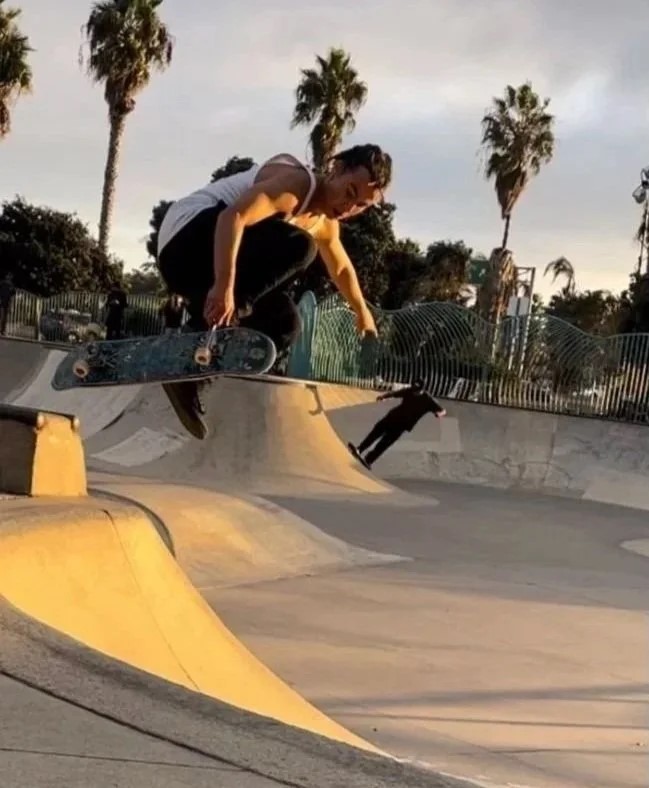
Ryan Lim's mother, Renee, advocates for legislative change in his honor.
Grieving Mother Takes Aim at Legislation
Part One
By Luke Schmaltz, VOICES Newsletter Editor
“To add insult to injury” is a common phrase in the modern vernacular. While it is widely applicable, sometimes a story comes along that sums up the phrase with singular precision.
Renee Lim’s grief journey is one such story. She is the driving force behind The Ryan Lim Act, named for her son, who died of an overdose in November 2022. Ryan died in San Diego County, CA, and remained unidentified for nearly six months while his mother and other family members searched endlessly to find him.
This profound miscarriage of duty on behalf of the medical examiner, the coroner, the first responders, and a host of other civic entities sheds light on a fundamental, deep-seated issue: lack of protocol, accountability, and communication around people who die from overdose.
Turbulent Times
“In addition to Ryan having an accidental overdose,” Lim begins, “He was not identified for nearly six months. The circumstances of his passing – where he was found – may have contributed to an unconscious bias toward the lack of effort that should have been put into finding his family.”
“Ryan had been in and out of treatment since he was 15. He struggled with substance use disorder, marked by periods of time when he did really well, and then he would relapse. He was a huge surfer, skateboarder, and artist. Like a lot of the kids we have lost, he was exceptional in many ways. He was in a number of different programs, and he went through a pretty serious relapse phase. He relapsed twice, and after the third time, they said that we were going to have to find a different program.”
“I called Ryan immediately because I was terrified of something happening to him. I told him I would come down right away or get him a hotel until we could figure out what was next. He decided to temporarily live with a friend who was in the program as well.”
“At this time, Ryan was just a couple of months shy of his 20th birthday,” Lim explains. “He was a super independent kid, and he always did things his way. The day he overdosed, we were texting that morning, and all of a sudden, he disappeared from the thread, which was very unlike him. He never failed to respond. So I filed a missing persons report and was working with some of the local investigators. We managed to track down the guy he had been living with. Someone had seen him on the street in the homeless area of San Diego. He had overdosed, and they called the paramedics. He still had a pulse when they found him, but it was too late.”
“I found out all this after he was identified…months later,” Lim continues. “I discovered that he passed within four hours of when we were texting that day. And for months, we kept getting reports of all these sightings of Ryan, with people calling in to say they had seen him here or there. He was tough and resilient and had lived on the streets before in San Francisco, so it wasn’t out of the question that he was still out there. But it was so odd that he wouldn’t call me. Also, his brother saw a Netflix login under Ryan’s ID, so we thought that was him.”
Lost and Found
“I spent months trying to find him, and all these organizations were trying to help. Not long after he passed, I called the medical examiner’s office and said, ‘I don't know what has happened to my son, here is his description, his tattoos, and I have a missing person’s report out on him.’ They said, ‘He isn’t here,’ although he was there, and they simply f@#ked the whole thing up.”
“So, I just kept looking for him. I had missing-person posters up all over the place, with a dedicated phone number just for those flyers, and I kept getting phone calls. Obviously, the sightings weren’t him – he had already died. Since the medical examiner’s office said he wasn’t there when he really was, it never occurred to me that he died.”
“Finally, someone from the recovery program Ryan was in called me and said they thought they saw him on the NaMus (National Missing and Unidentified Persons System) database. We had been checking every day to see if they had posted Ryan’s information, so that was another reason I thought he was still alive.”
“So, I called the medical examiner’s office again and said, ‘I think you have my son there.’ I gave them his description and his driver’s license number again. His dad and I got on a flight to San Diego, and by the time we landed, they confirmed it was him. He had been there the whole time. Although we finally found him, I couldn’t see him because it had been too long. Then it was a matter of getting him home and having his celebration of life.”
Anger and Confusion
Lim’s disdain over the circumstances endures alongside her grief. “I was so angry he was treated that way, because nobody deserves that,” she attests. “After we found him, I talked to the coroner and to the investigators, and they said that they were surprised that such a young, healthy kid had no family looking for him. I asked them what they did to try to find out who he was. Despite the detailed missing-persons report I filed into the system, the fact that I was working with detectives to find him, and the fact that their office and that of the medical examiner are practically next to one another, they simply blew it.”
“The coroner said, ‘I don’t know why this happened, and it shouldn’t have happened.’ Well, yeah – no kidding,” Lim says. “I was finally able to obtain all the reports from the police and paramedics for the day he passed. His phone and backpack were with him that day, and those items were lost. The investigator would have seen the same report, but no one looked at it and asked what happened to the phone. If they had found the phone and plugged it in, they would have seen the 10 to 15 calls from me per day.”
“They never tracked down Ryan’s phone or the rest of his property, despite my lawyer’s insistence. I kept records of my ongoing efforts to find my son and the medical examiner’s continued insistence that they didn’t have him when they did. So, I filed a lawsuit against them, and we settled. We went through mediation, and it was clear they felt bad about it, but that doesn’t change anything.”
Searching for Answers
“If Ryan had overdosed in front of the Public Library or another part of town, rather than in the homeless area, I feel like they would have treated the case differently. I feel like there was a bias within his circumstances because he was found in a bad area of San Diego. They didn’t put their understaffed resources into identifying who he was when they should have. It should have been obvious that he wasn’t living on the streets there, because he was wearing expensive clothes I had bought him. According to the timeline I put together, he had only been there for an hour before he overdosed.”
“When we were in court, the city officials said that they were going to change their procedures for cases like Ryan’s. There is no oversight for determining that, and they certainly weren’t obligated to report back to me. So, I wanted to do something that would affect policy and put steps in place so that other families would not have to go through something like this.”
“Ryan is not the first person this has happened to,” Lim concludes. “There are a lot of issues with identifying deceased people and notifying their families. One of the biggest gaps was the NaMus posting. It took them over four months to post his information. There is nothing that requires the medical examiner’s office to post information about an unidentified person within a certain amount of time. I don’t know if the people from the medical examiner’s office, who didn’t do their job, were ever investigated. We didn’t get any transparency into that.”
In Part Two, Renee Lim discusses the components of the Ryan Lim Act, her foray into the legislative process, and her journey to find peer grief support. Stay tuned to the November volumes of VOICES for the rest of the story…