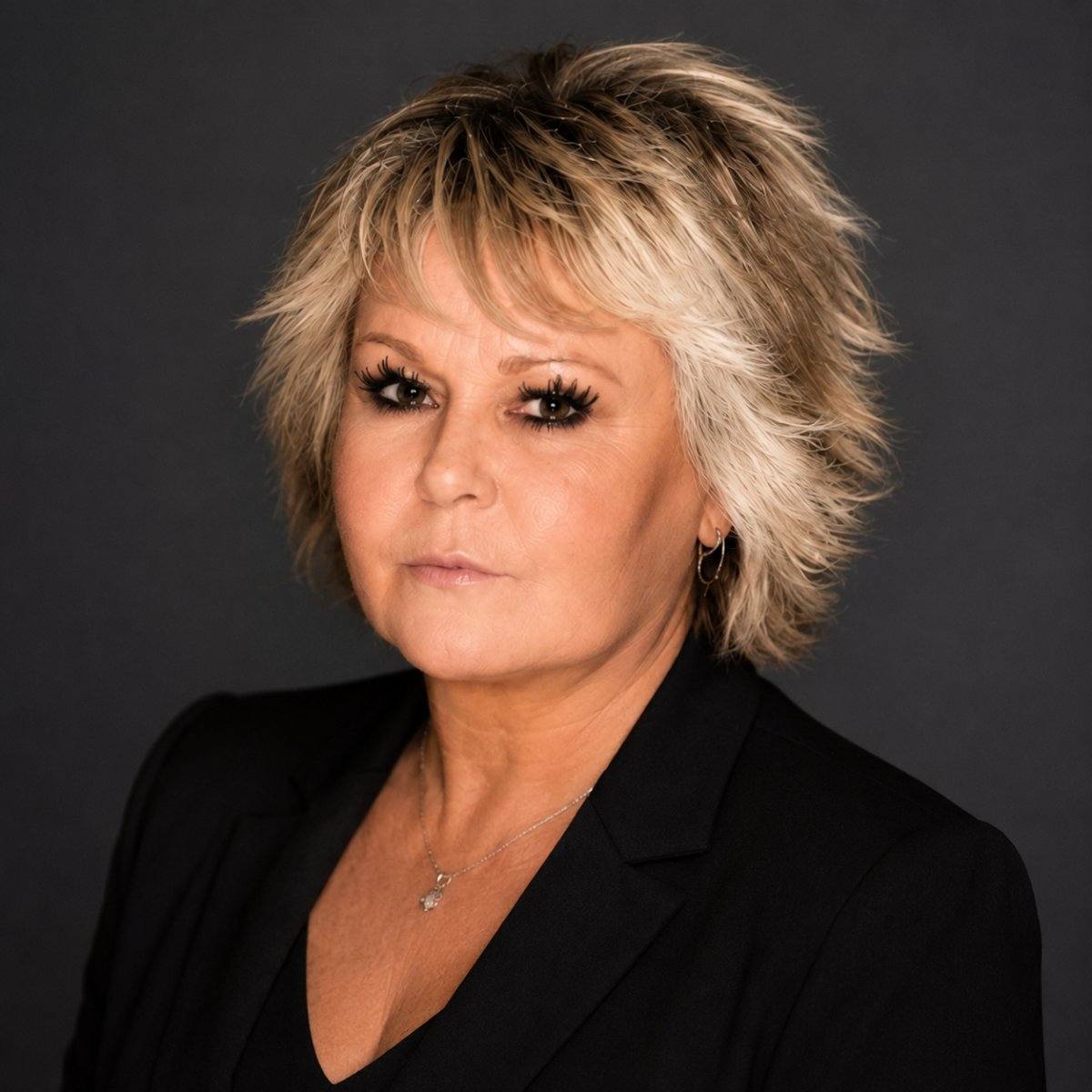
Kim Krawczyk writes about coping with childhood Trauma and grief.
Author Examines Grief and Childhood Trauma
Part One
By Luke Schmaltz, VOICES Newsletter Editor
Kimberly Krawczyk is the author of the newly published book, And Still I Speak: A Foster Child’s Story of Silence and Survival.
In her memoir, Krawczyk recounts a tumultuous journey that began in childhood and spanned into her adult years. Krawczyk endured parental loss, separation from her brother, foster care, adoption, substance use, addiction, treatment, grief, relapse, and long-term recovery. The book is now available at andstillispeak.com and Amazon KDP.
Krawczyk’s straight-to-the-point writing style spares readers the exercise of navigating extraneous details and gets right down to the meat of the matter. Her narrative dives directly into difficult circumstances, how they affected her, and how she found ways of coping with it all.
Lived Experience
When she was 12 years old, Krawczyk’s mother died by suicide. This event began a chain reaction that would forever change the course of her life, splitting her family apart and giving way to problematic behavioral patterns.
“Efficiency of words was my goal,” Krawczyk begins. “I wanted to capture what it was like for a 12-year-old to experience trauma and give the reader a clear sense of what it looked like from that perspective. I also wanted to offer the perspective of hindsight, looking back on it after having been through long-term recovery and having done a lot of personal work on myself.”
“When writing this story, and speaking about it now by doing readings, my nervous system goes to this place where I just have to shut down for a while afterward. I am reliving the trauma, which you don’t have to do every day until you write a book. I regulate my nervous system through meditation and mindfulness practices. I have to get my mind and body back into balance because the trauma still lives in me, and I can feel my nervous system responding to reliving it.”
Ongoing Struggle
“Krawczyk explains how a large component of the collective trauma she has experienced stems from the recent death of her brother, Michael. “I’ve lost a lot of people,” she continues, “But Michael’s death was the hardest. Maybe because his was the longest, most consistent relationship I have had, but I am not sure.”
“One of the difficult situations I write about is around my brother Michael’s death. There were only 40 people at his wake when there should have been way more. Reliving that brings up resentments that I thought were resolved. Having a sparsely-attended funeral made me feel like my brother and I were throwaways. We didn’t have a huge family. Sure, I came from the foster system, and my brother lived with my father. It was messy, and we didn’t have those essential, core relationships with people that other kids had. I truly felt like a throwaway at Michael’s wake, but at the same time, I felt determined to change that. No one is going to look at my brother’s life and not say his name. That is simply not going to happen while I am alive.”
Ironically, Michael died by overdose on August 31, which is International Overdose Awareness Day (IOAD). “For the first few years, I went to candlelight vigils on IOAD, but eventually I couldn’t do that anymore,” Krawczyk explains. “I couldn’t keep honoring him in that way because I was living in the death of him instead of the life of him. So, I changed the way I look at it. Now, I see that, every year on IOAD, everyone lighting candles is memorializing my brother. I had to put a positive spin on it to get through it. I started moving towards honoring him in other ways.”
“This year was the first year I did a reading at an overdose event since COVID,” Krawczyk says. “He was my only blood relative left, and I had to learn how to be present for myself.”
Relationships and Revelations
Krawczyk describes the writing process as an exercise in manifestation. “I have a relationship with a higher power,” she says. “Call it whatever you like, I don't want to push that on other people; it’s how I manage my recovery. I have a huge relationship with God.”
“When I was 30, I had about three years of recovery. I sent Oprah Winfrey my DCF (Department of Children and Families) paperwork. That was the foster care system. I had not yet lost Michael at that point, but I knew that my story of navigating the foster care system had to get out there somehow. I’ve been manifesting this since then, and my book came about through an experience I had in church. I had just lost my job working in peer support recovery. I didn’t want to go back to using drugs, but I wanted to hurt myself, and I didn't want to live anymore.”
“When you work in peer support, and a job goes away, they tell you that you can no longer have contact with anyone you used to work with. What they don’t consider is that these are the people who are helping you sustain your recovery. I was devastated, and I floundered for a year without purpose. I was in church, crying, purposeless, and talking to God. He came to me so clearly and said, ‘Write a book.’ I went home that day and wrote five chapters.”
“Many of the details, especially around my mother’s death, I didn’t remember until that day. The words came from God, and they flew out. It was beautiful and traumatic all at the same time, and I sat on it for months. I wasn’t sure how I was going to get through the rest of it, emotionally, so I knew I needed support. I put out a post on Facebook, and that's how I connected with Susie Lordi for this project.
Aligning with an Ally
“Susie and I had been longtime friends,” Krawczyk continues, “Although she didn’t know a lot of details about my past and why I do certain things the way I do until she read my work. She said she wanted to help me, and we got the rest of the chapters together and found a publisher.
Susie and I met at Brockton Recovery Center 10 years ago. I was coaching a woman, and Susie was also helping that person, who is an artist, through 24-Hr. Power, her nonprofit for artists in recovery.”
“Susie coached me; I would write and then we would meet. If I had a problem getting through a situation that was difficult to write about, I would get down the basics and she would prompt me with questions that helped me elaborate on the details. Then, we would meet again, and that was the process through which we completed the book.”
“One door opened another, and they keep flying open for me. I had to find the courage to be naked in front of people, not necessarily about the trauma around my addiction, although I still have some shame there. I have no problem saying that I am a woman in long-term recovery, but going into the nitty gritty is hard – having people view me as the person who went through all that exploitation – because I am not that person anymore. But it is necessary to go through all of those details for the sake of the story.”
Pitfalls of Pity
Krawczyk offers poignant insight into the dynamics of pity. In one of the chapters, she writes, “Pity lowers the bar.” In this context, she refers to how, for those who have suffered through difficult circumstances, pity can lower expectations, holding the person to a different set of standards than others. “We do that all the time to people,” she says, “And it is such a misstep in the resources that are given out to people who are struggling. For example, my foster mother enabled my bad behaviors. I didn’t have to accept the consequences of my actions until she stopped doing that. If we don’t allow people to face consequences and learn from them, no one will grow.”
“I look back on my entire life, and there were times when someone passed me through school because they felt bad for me, or gave me a certificate of completion out of pity. I used that dynamic out of manipulation. I would tell my story and get what I wanted, thinking I was helping myself, but I was really preventing myself from growing into someone better.”
Purpose and Focus
Krawczyk cites writing about loss and grief as a cathartic, profoundly helpful experience. “The benefits came about slowly,” she says, “But now that I am at the end of it, I can see that Michael’s story is going to be in the world forever. This is my purpose, and I am so honored to be the one who gets to carry his name and give it life for long after I am gone. His message is here forever, and that makes me so proud. This was my mission after he died, and I was not going to just let him be another number, another statistic, another person to call an addict. He was loved, and he was so much more.”
“Now that I look at the story in its completion, I think, ‘Wow, Kim, you were able to do all that and navigate, manage, and survive the experience. You rock.’”
In Part Two, Kim Krawczyk delves further into her overlapping journeys of finding recovery, coping with grief, and becoming an author. Stay tuned to Volume One of the November issues of VOICES for the rest of the story…

Scan this QR code to go to Kim Krawczyk's author website.