Bereaved Mother Grieves Out Loud
Part One
By Luke Schmaltz, VOICES Newsletter Editor
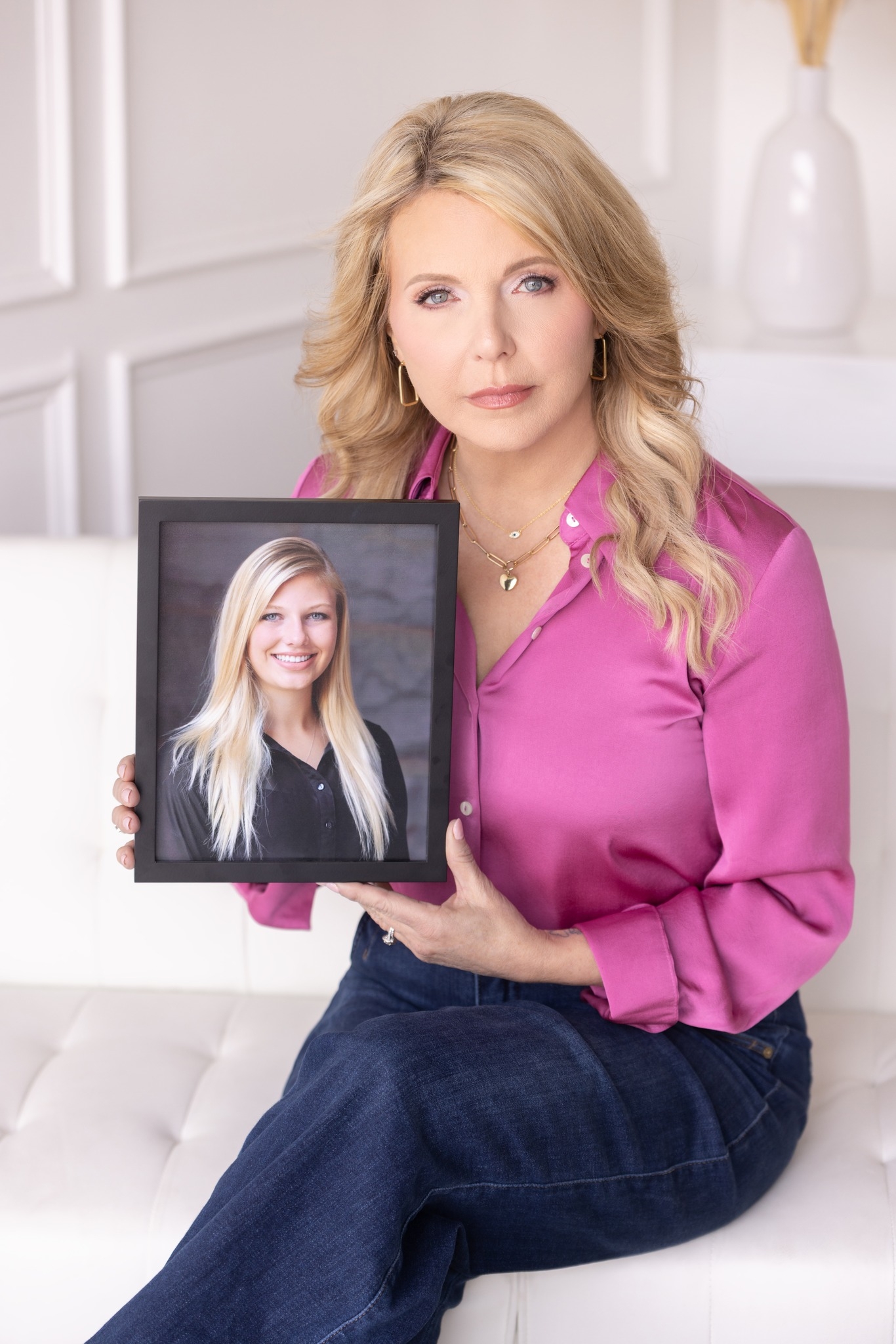
Angela Kennecke is the founder of Emily’s Hope, a charity named in honor of her daughter who died of fentanyl poisoning on May 18, 2018.
As a former television journalist and current host of the Grieving Out Loud podcast, Kennecke is dedicated to acknowledging, discussing, and dispatching the stigma attached to overdose death and substance-use-related issues.
Kennecke shares the struggles of her journey, the importance of taking action, and why she fosters ongoing, widespread communication.
Troubled Upheaval
“I am approaching eight years since Emily died,” Kennecke begins. “It’s hard to believe because it seems like just yesterday. I was working as a TV news anchor and an investigative reporter – which I did for 35 years. I had a very public job when I lost my daughter, we were three days away from holding an intervention. I knew there was something wrong. She thought weed was the best thing ever, she started using in high school. I also knew she was using Xanax, but that was the extent of what we knew.”
“We struggled with Emily for years,” Kennecke continues, “It started at age 15 with rebellion and acting out. She is my oldest kid, and I didn’t know what to do. Now, I know how unusual her behavior was, because our younger kids never displayed anything like that. I did everything under the sun to rein her in.”
Kennecke equates the experience to a cataclysm. “I have heard it likened to being caught up in a tornado, and when your loved one dies, the storm just spits you out. It is like trying to stop a freight train from running you over, but it runs you over anyway.”
“I saw this path she was going down, she was influenced by her boyfriend, who was really into weed, but she had some accountability for her choices, of course. Now we know how bad weed is for the developing brain and how it can set kids up for mental health and addiction issues.”
Matters of Time
“It was such a difficult time for the entire family,” Kennecke says. “I never thought substance use would kill her, and I certainly thought there was time to intervene. Emily was 21 when she died, but three weeks before, my son told me that one of Emily’s friends had died. Much later, I found out it was to fentanyl overdose, but in the meantime, I leaped into action. We found an interventionist and we thought we had time. Fentanyl had barely been talked about.”
“At the time, I was reporting stories on the overdose crisis. I interviewed a mom whose daughter died of a heroin overdose and covered many similar stories. Years earlier, I interviewed a woman from the East Coast whose twin sister had died from a fentanyl overdose in 2012. It made its way from the coast to the center states, so at the time, nobody was really talking about it like we are now. We didn’t have naloxone or Narcan like we do today.
I realize now, there is so much confusion for families around substance use disorder and the person struggling with it. It is so hard to know what to do, and half the time you do the wrong things – you’re just trying to do anything because you love your family member so much. It hijacks them, it takes them away. They are not the person they are supposed to be or the person they were.”
Crossroads of Courage
“When Emily died,” Kennecke continues, “I was devastated and I never even thought I could go back on television again. But I had three other kids at home who needed to go to college and have health insurance. When I went back to work, I decided to make it public, because I had this platform. I am an investigative reporter by trade, so I don’t shy away from things, and I am not afraid to address issues.”
“That doesn’t mean that everybody needs to do what I did, people don’t need to go public if they don’t want to. But I felt an obligation to go public with Emily’s story because I had asked so many people, over the years, to talk to me after they lost kids – after their homes were devastated by the tornado. How could I not?”
After Emily died, Kennecke recalls the first time she went back on television. “I was so scared,” she says. “I remember thinking, ‘This isn’t my story – this is not supposed to be my life.’ I had control of my career, and my personal story was never part of what I talked about as a reporter. To make the story about my family and me went against everything I worked so hard to build. To suddenly have my daughter’s story – my story – become the center of the reporting wasn’t anything I ever would have wanted.”
“That was frightening. I didn’t know how people would react; I expected the worst of the worst. As bad as social media is now, it was bad eight years ago as well. I expected to be seen as a bad mom whose daughter was a junkie. Yes, I got that, but it wasn’t as bad as I expected. 98 percent of the community rallied around me. The problem was, and still is, those negative comments are the ones that stick out in our minds. Unfortunately, we have to contend with that element.”
It Takes a Village
“I didn’t form the charity by myself,” Kennecke says. “Everything just sort of fell into place and I said yes to a lot of things. Shortly after Emily died, I found out there was a treatment center being built in my community and I asked if I could raise some money for that project to help people get into treatment. They said, ‘Yes, of course you can.’ That led to me form the nonprofit. To this day, I have people come alongside me to offer help – whether it be with the right grant or the right donor.”
“We have a staff of eight people now. I have an incredibly supportive husband, a very supportive board. We are working with the State of South Dakota to run a post-overdose response team and distribute naloxone. A lot of the opioid settlement dollars came into play on that initiative.”
Focused Intent
“I started the podcast in April of 2019, a year after Emily died because nobody was talking about the opioid crisis. I wanted to talk about it so that other families could know they are not alone. Although every person’s story is unique, and each person’s grief may present differently, there are universal circumstances around grief all of us have been through.”
“I felt so alone, especially in the position I was in and the platform I had access to. People couldn’t understand the feelings I was going through, and I didn’t necessarily want them to.”
“My life looks completely different now than I ever thought it would,” Kennecke continues. “But I don’t regret what I have done. The podcast is on its 254th episode and we have a few hundred thousand downloads at this point. We maintain a steady base of listeners, but there is so much out there competing for people’s attention these days. There’s no revenue from this podcast. In fact, it is part of our mission to spread awareness and offer support. We spend the donor money to meet the production needs.”
“I became a certified grief educator through David Kessler’s class. I lead a local monthly support group, and there is always someone new who joins. These are in-person meetings, and there is something about being with other people that helps with the healing.”
Tough Acceptance
“What I have noticed through my own grief, is that time dulls the pain, but it never goes away," Kennecke says. "It comes in waves and you don’t always know what is going to trigger it. I have learned a lot from my podcast guests. I believe that suffering and grief make us more human and able to connect with others. Grief has taught me what is really important in life, and I am grateful for the pain. It has transformed me into a different person and led me to learn so much and to meet people and find out what truly matters. I miss my daughter but my acceptance of her death, eight years later, is much greater. I accept the fact that she is not here with me, although I don’t like it.”
“I think we spend the first few years having a hard time coming to terms with the fact that our person is gone. I had a spiritual crisis, but now I look at it differently. I feel that she is with me in spirit and I can feel her. In our support group, we say, ‘Grief is love with no place to go, but we give it a place here,’”
In Part Two, Angela Kennecke delves into self-kindness, the lessons of grief, the importance of education, and the breadth of guests she speaks with on her Grieving Out Loud podcast. Please stay tuned to the April edition of VOICES for the rest of the story.