Recovery Community Embraces Peer Grief Support
Part Three: Warren Nicoli – A New Way Peer Recovery Center
By Luke Schmaltz, VOICES Newsletter Editor
This series explores the growing role of peer grief support within the recovery community. Part One and Part Two discuss this dynamic in Northampton and Weymouth.
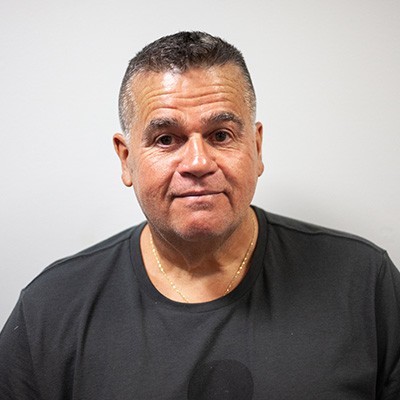
Warren Nicoli is in his ninth year as the Director of A New Way Peer Recovery Center in Quincy. His 30+ years in recovery inform his leadership, as he helps a community of peer supporters create connection, growth, and healing.
This location, which opened in 2014, is part of a network of 39 facilities run by Bay State Community Services.
“Our recovery centers are based on a peer participatory process,” Nicoli begins. “Folks who come into the recovery center are peers, they are not patients, and they are not clients. Some can become members, and some can use the facility for the support groups we offer. Support is available for those on all paths to recovery.”
Consistent Concern
“When it comes to substance-use-related death,” Nicoli continues, “We are faced with it from time to time and we have lost people within the organization. Losing a staff member to an overdose is a particularly hard hit because peers look at the staff for leadership. When that happens, it deeply affects the team as well as the peers themselves.”
“Around eight years ago, we lost three staff members within about a six-week period. Within the last year, however, the numbers are definitely going down. This is very encouraging, and Narcan has been a big part of bringing those numbers down. We are even seeing our Narcan distribution numbers go down because the communities are so saturated with it.”
Regardless, Nicoli acknowledges that the crisis is ever-present. “Recently, a gentleman named Tony died of an overdose. He was a big presence around the center – he extended his hand to everyone. He was one of the cases where, when I got the phone call, I said, ‘What? Really?’ I just didn’t see it coming.”
Nicoli explains how these instances are addressed through additional support measures for the benefit of staff and peers. “We brought in a pastor from Life Community Church in Quincy,” Nicoli says. “We invited all the staff and peers, and he performed a short service. Then we opened the gathering up to let people talk about their feelings around the circumstances.”
“Loss can occur on the turn of a dime. When it happens, we try to make the support we offer as user friendly as possible. We try to make it so that people are taken care of by having a place to talk about it.”
Dedicated Support
“The Sun Will Rise foundation (TSWR) comes here once a month and facilitates a peer grief support group,” Nicoli continues. “They have been coming here for the last five-or-so years. When they come in, we know they could have lost someone that morning. But they take care of themselves and extend their knowledge about peer grief support to the people who frequent our center.”
Robyn Houston-Bean is the founder of TSWR. She facilitates the peer grief support group at A New Way Peer Recovery Center. “Our Quincy group at A New Way was the second peer grief support group we started,” she says. “From the beginning, I believed that having a group in a recovery center could help send the message that grief support isn't just for family members, it’s for anyone impacted by a substance use related death, including those in recovery. A New Way offered a warm, private space to begin building that kind of support community.”
“At the time, Learn to Cope also held a family support meeting in the same building,” Houston-Bean continues. “Their group focuses on supporting people whose loved ones are still in active addiction. While our purposes are different, both groups created spaces where people felt heard and understood. What often happened was, when someone’s loved one died, they no longer felt like they belonged in that space. It was hard to sit among people who still had hope.”
“Learn to Cope facilitators were incredibly compassionate and would gently guide those grieving toward our group, sometimes literally walking them across the hall to introduce them. That handoff was deeply meaningful and helped people feel like they were still part of something and that they still mattered.”
“The group has ebbed and flowed over time, as many do, but there’s a strong core who show up month after month. It continues to be a space where people feel safe to say the things they can’t say anywhere else. One night, someone shared a story about their person that had us all in full belly laughs – the kind that sneak up on you and leave you crying. A facilitator from the other group came over and asked if we could close our door because we were being too loud. We all laughed even harder. Imagine asking a grief group to keep it down. That moment really captured what this group is about; showing up however you are, whether the night brings tears, laughter or somewhere in between.”
Something for Everyone
“We have groups throughout the day, Monday through Saturday, and the calendar’s offerings vary from one day to the next,” Nicoli explains. “Every day, we have a 9:00 am check-in session for anyone to participate in whether they want to talk about having just had a bad night, or if they are currently struggling. This can be followed by groups focused on topics like yoga, codependency, dual diagnosis, artistic expression, LGBTQ+, holistic healing, gamblers anonymous, AA, NA, ALANON, Overeaters Anonymous, and many more.”
“We also have a reading and discussion group around a book entitled The Subtle Art of Not Giving a F*#k, by Mark Manson” Nicoli says with a chuckle. “It’s a great book that presents a different way of looking at recovery. It’s not about being indifferent. Rather, it’s about being OK with being different. That group has been going for four or five years now as well.”
"The place gets packed at night. One of the popular groups is called S.M.A.R.T. Recovery, which focuses on recovery from all types of addictions, but they take the ‘God’ piece out of it all. It is more of a cognitive behavior group which includes meditation and open discussions. A lot of our groups are hybrid, which means the group is held in-person and over Zoom at the same time. One of these is the Veterans Support Group held on Tuesdays.”
“Recovery is hard,” Nicoli concludes. “You see people struggling and you want to say, ‘It’s way better on this side,’ but as it was with me 35 years ago – I got there when I was ready to get there.”