
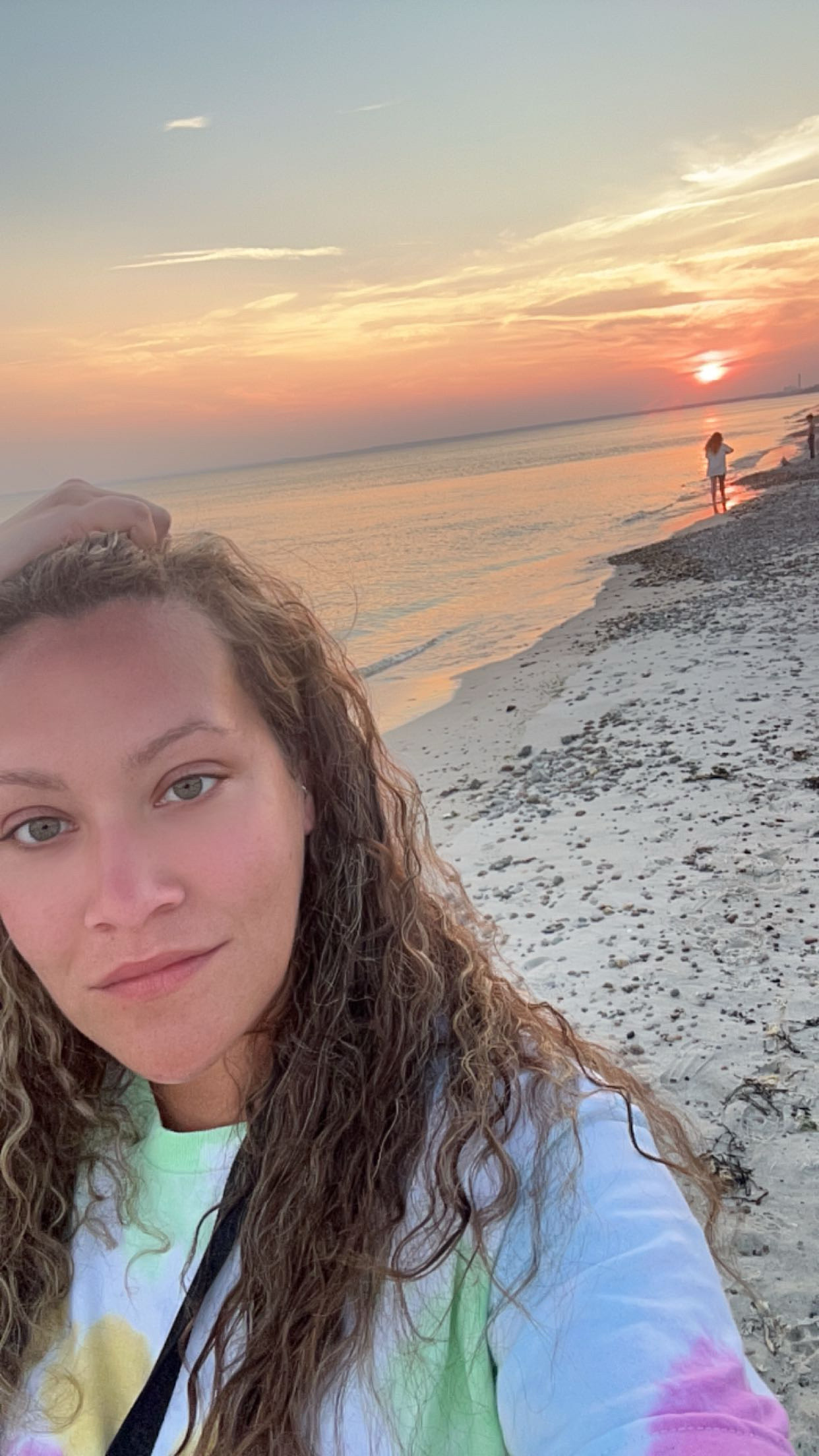
Recovery Coordinator Recounts Journey Through Loss and Grief
Part One
By Luke Schmaltz, VOICES Newsletter Editor
Stacey Kitt is in her seventh year of recovery. She works as the night coordinator at Bedrock Recovery Center. Her journey began on April 10, 2018, shortly after the devastating loss of her partner.
“You don’t know what grief and loss are like until you experience them,” Kitt begins. “Until I experienced the loss of someone close, I never fully experienced grief.”
Toxic Loss
“The first time I experienced all-consuming grief was seven years ago, on March 30, 2018. My boyfriend, Adin, died of an overdose. We had been together for 12-and-a-half years, and he was also the father of my daughter. She was seven years old at the time, so this year is a significant one for sure.”
“We were both in active addiction at the time,” Kitt continues. “We had been struggling for quite some time with polysubstance use – flipping from one addiction to another – but primarily it was opiates. Both of us had gone to treatment centers, him more than I. A year prior to his death, he went to stay with his aunt up the road so that we could both focus on our own recovery and stop egging each other on.”
“The space between us didn’t matter though because the relationship was highly toxic and when we were apart, I felt a pull to get back with him. About four days before he died, I texted him saying there are options other than us being separated – there are other ways out of this. I was referring to medication-assisted treatment such as suboxone or methadone.”
“He was in a darker place than I was at the time. It was Friday March 30. I got a call from his aunt who was hysterical. I had spoken to him the night before and everything was fine. I was unaware that he had passed because my family didn’t want me to get the news while I was alone. Regardless, they decided to tell me before I got a call from someone at the hospital. When my sister-in-law called around 5:00 am, she told me to go into a room by myself, away from my daughter, Ava.”
“I went into the laundry room, and when she told me I just collapsed. I had never had such a physical reaction. What helped me through that was talking to my best friend of 30+ years, whom I had called around 7:00 am that morning. She had recently gotten sober in Florida, and she hopped on the next flight and was physically beside me by 4:00 pm.”
Family Matters
“I didn’t know what I needed at that time because the situation was so raw,” Kitt says. “Later in the day, I told my daughter what happened. She was very close to her dad as well. Her reaction wasn’t immediate, but she eventually began to cry, and feeling her grief was hard. It wasn’t until the third night after he died that she was able to fully comprehend the circumstances. That was the gut-wrenching moment for me. I wasn’t sure how we were going to get through it. I am so grateful that I had family near us at the time. They rallied around me, which is one of the good things about being from a big family.”
“The first week after he passed, I was caving in to my grief. With my friend there, I was able to come clean – she knew I had a problem. I was also trying to do a maintenance program through a local day clinic. I was able to remain sober through all the funerary services. Regardless, I was shutting down. I didn’t want to be around all the family because it was too much.”
“The night he passed, it was just a 50/50 shot for both of us. We both had the same drugs, just divided, and his half was lethal. The day he died, I continued to use. That’s how powerful addiction is. After that, I didn’t use for nine days. Despite the outpatient program, I was still not OK, so I ended up going to a place called Swift River in Cummington.”
From the Ground Up
“That experience helped me to start creating a foundation for myself,” Kitt says, “Not just for recovery, but also for dealing with grief. I was struggling because I was subconsciously compartmentalizing my experience. I was hysterical because I didn’t know how to leave my child. She was not OK. Thankfully, my brother and sister-in-law rallied and brought my daughter to their house, even though that wasn’t where she wanted to be. They made a safe haven for her. In a way, she lost both of her parents at the same time.”
“Before going to treatment, I got my daughter a pediatric grief counselor. I met with them the day before I left for Swift River and explained the situation, so I knew that she at least had some additional support aside from the family around her. The plan was that I would go away for 30 days and give treatment a full chance instead of picking and choosing things I thought would work for me.”
“The first few days at the treatment center were all grief. I couldn’t even wrap my head around dealing with addiction yet. After a few days in, when I was feeling physically better, I started focusing on addiction. Halfway through my stay, they did family therapy sessions. My brother, my sister-in-law, and my mother came to visit. At that meeting, my mom told me that she had been diagnosed with stage four ovarian cancer.”
“I then realized that I was going to need more time; 30 days was not going to be enough. My mom broke down crying, only because her reaction was one of relief because I had been unwell for such a long time. If I had gone home after 30 days, I would have been another task for my family to handle. So I went to Northeast Addiction Center in Quincy. They are the sister company to Bedrock Recovery Center. They laid down a strong foundation for me and I did the full PHP (Partial Hospitalization Program) where you’re living in a facility, and you go to groups, but you have a little more freedom. It eases you into society.”
Measured Assessment
“I stopped asking when I was going to go home and started embracing what was happening. That’s when I started meeting friends – some who had experienced grief and others who were just trying to change their lives. It was a transformative time because I started talking about my life. The first few times I spoke, I was mostly in hysterics because I was so shattered. There were a lot of pieces that I was never going to be able to put back together.”
“My friend from Florida told me that the thing about being shattered is you can put the pieces back together however you want them to be. That’s how grief is; you feel so broken. It affected my addiction and all other aspects of my life. Leading up to treatment, I wasn’t sure if it was going to work but I knew I couldn’t live another day the way I was. It was a gift of desperation; I was so desperate to feel better that I was willing to do things I wouldn’t normally agree to.”
“That’s when things started getting better. After six months, I started dropping down levels of treatment until I was just in sober living. I was away from home for a total of 11 months. Thankfully, once I was in treatment for a month, my daughter was able to see me. Once I was in sober living, I was able to go home on the weekends. It was an amazing program, and it changed my life.”
Giving Back
“At Bedrock Recovery Center, a lot of what I do is talk about prevention through the skills that help me such as meditation, mindfulness, therapy, and peer support groups. If these are not maintained and then something happens and you turn to them for coping mechanisms, they don’t always work. You have to practice, almost daily, for these skills to be valid.”
“I have worked at Bedrock for the last five years,” Kitt continues, “And I have been facilitating groups for the last four years. I also stay connected with clients after they leave through follow-up phone calls. My fellow recovery coaches and I also do a recovery alumni meeting once a month where we invite people who have graduated from the program, whether it was six months ago, a year ago, or three years ago, to come back and share their experiences and what has been working for them long-term. It is very inspirational.”
In Part Two, Kitt recounts additional losses of loved ones and how therapy, communication, and peer support helped her cope with grief. Stay tuned to VOICES for the rest of the story in the August 2025 issue.