Massachusetts Communities Receive Opioid Settlement Funds
Part Seven
By Luke Schmaltz, VOICES Newsletter Editor
Over $1 billion has been awarded to 351 communities across Massachusetts, which will be distributed over the next decade-and-a-half. A series of lawsuits against opioid manufacturers, retailers, and distributors, led by then-Attorney General Maura Healey, settled out of court in 2021 and 2022. These corporations include Allergan, CVS, Johnson & Johnson, Purdue, Teva, Walgreens, and Walmart. Payments are being distributed to each municipality according to per-capita rates of opioid-related deaths.
This series examines how community leaders are accessing the funds for use within their specific municipalities. The allocation process varies from one region to the next, yet each township must foster a thoroughly inclusive discourse between residents and government officials in order to determine the areas of greatest need. Each township faces specific opioid-related challenges, including overdose deaths, homelessness, recovery challenges, education, community outreach, and more.
This installment focuses on the unique circumstances in Belchertown, which according to Caremass.org, received $154,442 between July 1, 2022, and June 30, 2023.
Informed Leadership
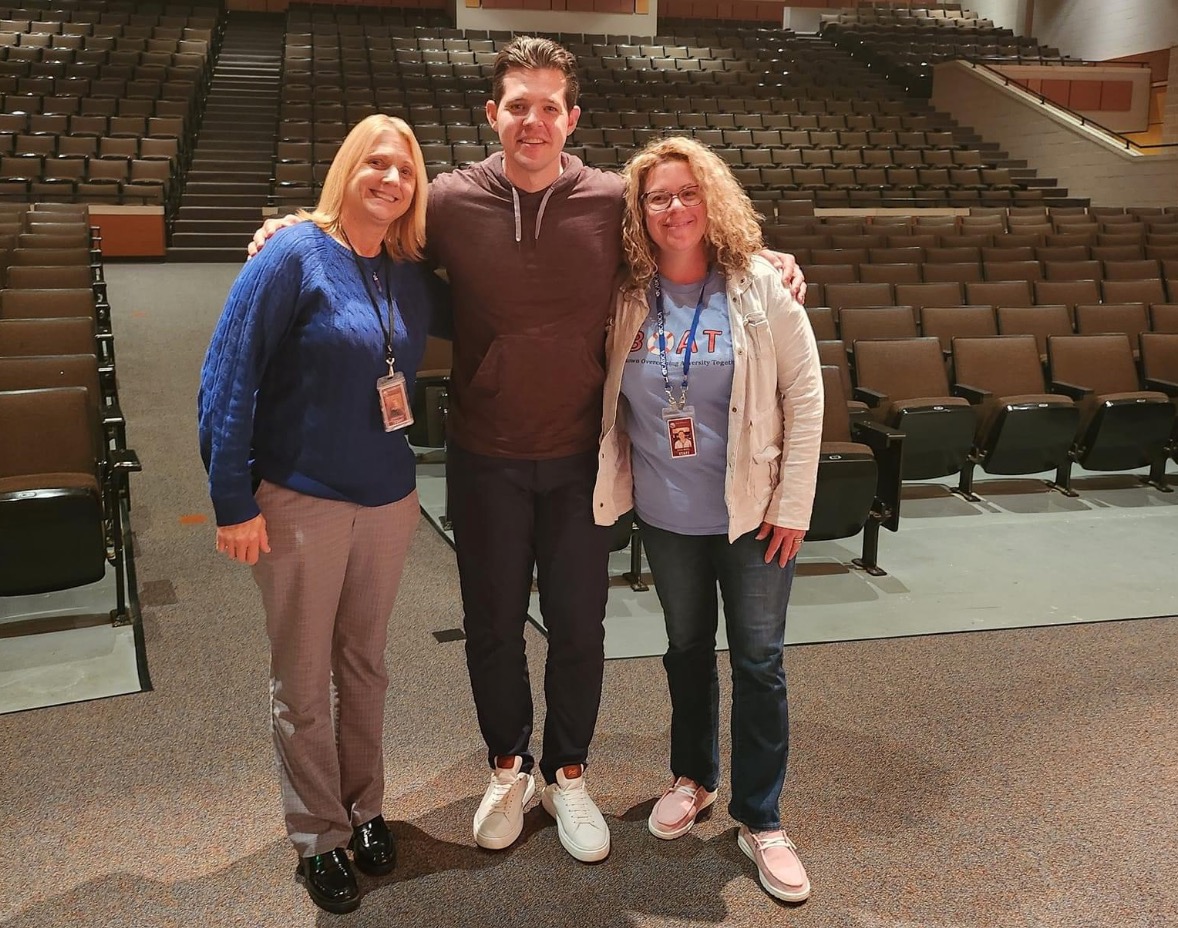
Kris Hoag is the Chair of BOAT (Belchertown Overcoming Adversity Together) and the Program Director for a Drug Free Community. Hoag helps to foster ongoing conversations between residents and city officials to determine the needs of the community and direct the settlement funds accordingly.
“We put together an opioid settlement fund committee,” Hoag begins. “We started to convene in November of 2023. “I represent the schools because my position is at the superintendent of schools’ office. Others on the committee include an officer from the local PD, a pediatrician, a recovery program director, and a community member with expertise in opioid outreach.”
“Our town administrator put together this team by invite and we are currently mapping out how much money we are getting from specific corporate entities. We met as a team and discussed what we want to accomplish. Our next order of business was to get this out to the community, so we sent out a press release about the opioid settlement funds and for what they are specifically allotted. We held a public forum in the town hall, so that anybody could learn about what the funds can be used for and how to apply for access.”
Welcome Participation
“We then published an application, so that anybody could solicit access to the monies for relevant community needs. We went in front of the Select Board in Belchertown and discussed how to allocate the funds. We separated the opioid settlement funds from the town’s general account for the sake of clarity and accuracy in reporting on the spending.”
“Because we are such strong voices, there is no way this money is going to go to park benches or potholes. The town officials are very much aware of what our goals are for the money. We explained to the Select Board our thought processes, asked how they wanted to proceed, and they gave us freedom to accept applications from residents and community leaders.”
“People submit applications to us, they are added to the monthly meeting agenda, and they can discuss their case for accessing the funds. As a committee, if we approve an application with a majority vote, then the application goes to the Select Committee for final approval.”
Work in Progress
“Recently, we had two applications. The first was for after-school programming for the middle school for prevention work. Funds for that program were cut the year before and, as we know, after-school programming is a huge factor in protecting kids from substance use. Statistics show that if kids aren’t involved in some sort of structure, whether it is work, sports, or a club – they are four times more likely to use substances.”
“The school principal put together a proposal, he presented it at the monthly meeting, we went in front of the Select Committee and our Opioid Settlement Fund Committee Chair presented the school’s application. They had a couple of questions on how we were going to keep track of data, but it was approved, and it went through.”
“We now have our first opioid settlement fund project, which is the after-school programming for our middle school kids.”
“The second proposal was Drug-Free Community. Under our current grant, I am limited to 33 hours per week and my coworker is limited to 20 hours – even though these are salaried positions. We are also limited to prevention around marijuana, alcohol, and tobacco. We are not even supposed to be doing opioid prevention because those were the guidelines we chose when we first got the grant. However, it is way too important to dismiss the immediacy of addressing opioid prevention and getting the right messaging out to the community. Our program has grown so much, and this will give us the opportunity to expand from our original guidelines as the funds will allow for us to work more hours and dedicate the time to addressing the opioid crisis.”
Building Capacity
“We anticipate other parties coming forward with more proposals. In the meantime, as a committee, we are looking into other areas such as harm reduction because it is lacking in our area. We are in an area where there is not a lot of transportation for people in need. We have more ideas on what the money can be used for.”
“Our town administrator is 100% on board with this initiative. We have a strong community because of the connections between residents we have fostered. Capacity-building is the number one thing communities want to start with. You really need to build your capacity and your connections, and then you can start taking projects forward. If you just call someone up out of the blue, without a preexisting rapport, and tell them your ideas, they are not going to respond as well as they would if you had already made a connection with them.”
Personal Reflections
“I have a lot of passion for what I do,” Hoag says. “My background is higher education administration and faculty. I taught leadership management and social psychology. I shifted gears because I became a director of education at an adult school in Springfield. This inspired me to want to help younger people as well, so I became a licensed principal for K-12 based on my degrees.”
“I got into my own situation with alcohol at 39. I was married to somebody who was incredibly abusive – both verbally and emotionally – they were an alcoholic. I started drinking all the time to deal with it, plus it is in my family, and within three years I couldn’t stop. We divorced and it took me two years to get into full recovery, but the experience has helped with where I am today. I lost a brother to overdose as well 22 years ago. I decided I needed to help other people find a way out and that’s when I became a substance use clinician.”